A lost debate on the memorialization of war
The shifting debate from documentation and memorialization to public punishment.
Testimony is never simply information or data waiting to be collected, systematized and turned into statistics.
None of this requires questioning Gashi’s intention to memorialize the war. However, intention, in itself, is not enough.
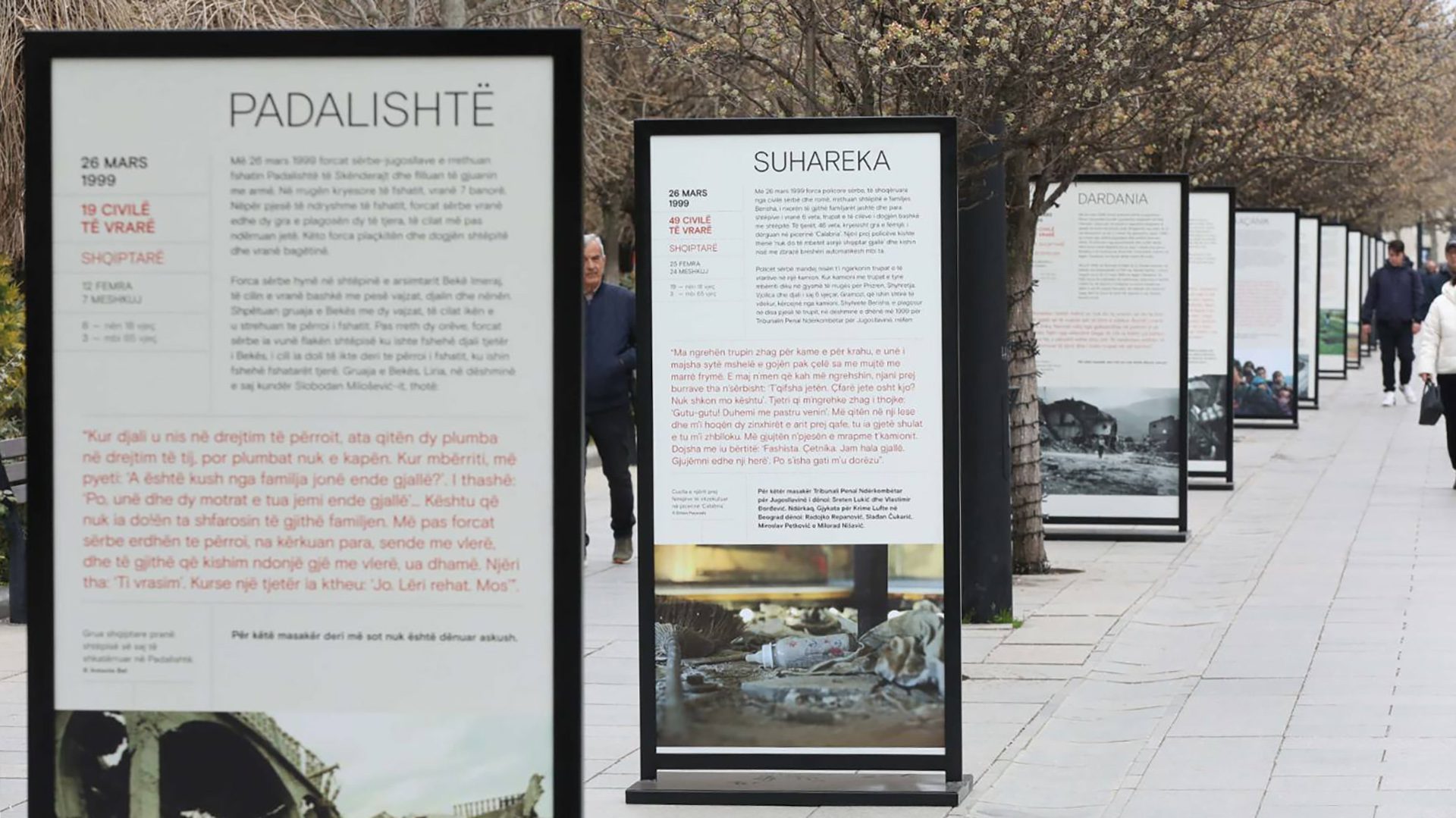
What had to follow, then, was a deeper confrontation with the ethics of memorialization, the standards of documentation and the obligations that come with turning war crimes into a public display.
What responsibility does someone, with institutional support, assume in exposing massacres in the central square of the capital in front of an audience that includes survivors, family members and young people with no living memory of the war?
A state that truly wants to honor victims bears responsibility long before the prosecution knocks on anyone’s door.

Dafina Halili
Dafina Halili is a senior journalist at K2.0, covering mainly human rights and social justice issues. Dafina has a master’s degree in diversity and the media from the University of Westminster in London, U.K..
DISCLAIMERThe views of the writer do not necessarily reflect the views of Kosovo 2.0.