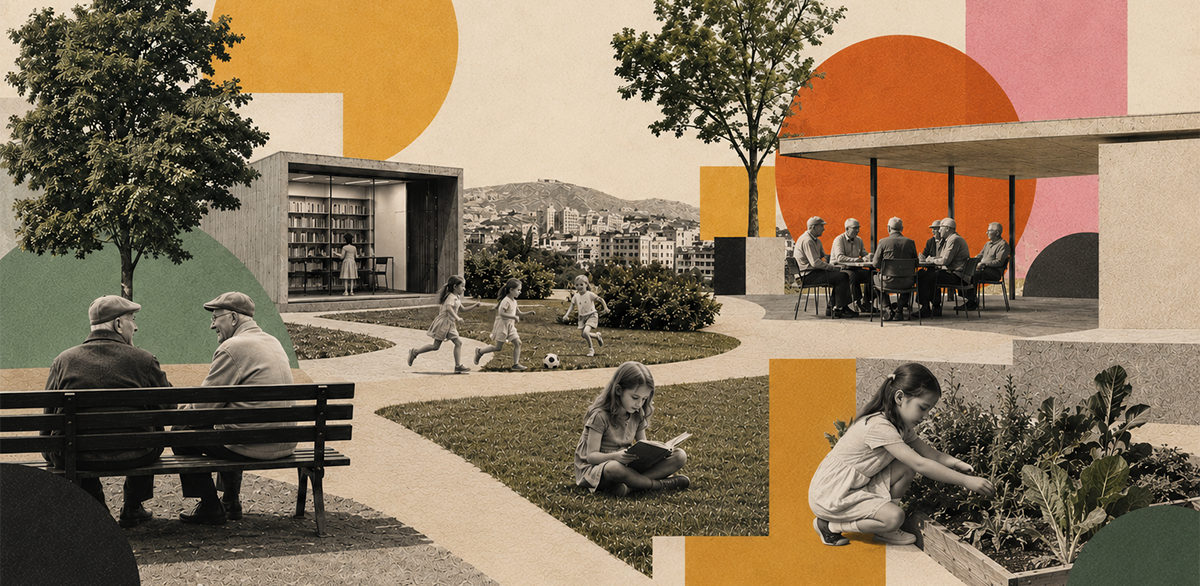
A place without common space
Prishtina may have had a weekend of small civic miracles, but its political elite refuses to learn from them.
This is what Klinenberg means by “social infrastructure”: not “social capital,” not how close people feel to one another, but the physical conditions that enable the creation of social capital.
It’s not just that our children are bored on weekends. This boredom demonstrates that we are systematically failing to create the conditions for them to become part of society.
Our politicians fly to Switzerland to seek votes from the diaspora. They do not fly to Switzerland to ask the Swiss how they built these things.
What this class lacks is the imagination for the kind of durable, invisible, long-term construction of public space that truly changes a place.
The strange thing about social infrastructure, which Klinenberg returns to repeatedly, is that even the small, fragile version built by NGOs works.
Agron Demi
Agron Demi is a civil society activist and the founder and executive director of the Atlas Institute.
DISCLAIMERThe views of the writer do not necessarily reflect the views of Kosovo 2.0.