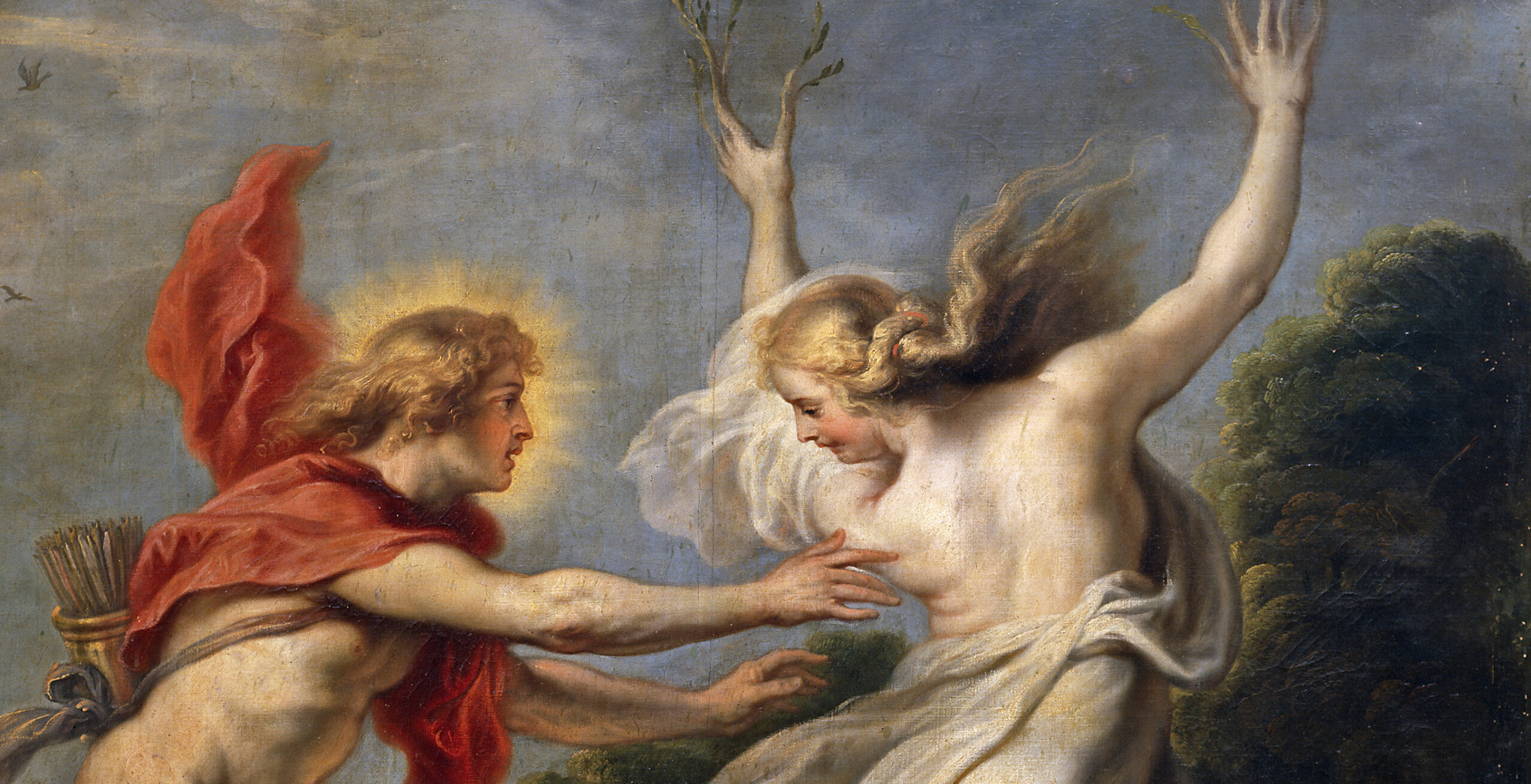
After Daphne: women, recognition and the politics of belonging
How women become memory, and how remembrance preserves what they made while leaving them out.

The torn cover of Ovid’s Metamorphoses. Photo: Courtesy of the author.
This is the paradox I want to carry into Kosovo, though not as an allegory into which every woman may be forced, and still less as evidence that Kosova is uniquely patriarchal.
Women enter public memory too readily as victims, although the record before us is equally one of feminist organisation, political judgment, and action under impossible conditions.
The woman the nation finds easiest to honor is often the woman it can wear like a laurel.

Dafina Paca
Dafina Paca is a newly qualified doctor, who recently started work as a resident doctor in paediatric surgery at the University Hospital of Wales and a lecturer at Cardiff University. She completed her PhD at Cardiff University, her MBBCh at Swansea University and is a Fellow of the Higher Education Academy. She also holds an MRes and a BA from Queen Mary University of London. Her work examines migration, diaspora, memory and belonging, and the structural inequalities that shape education, healthcare, remembrance, public and political life.