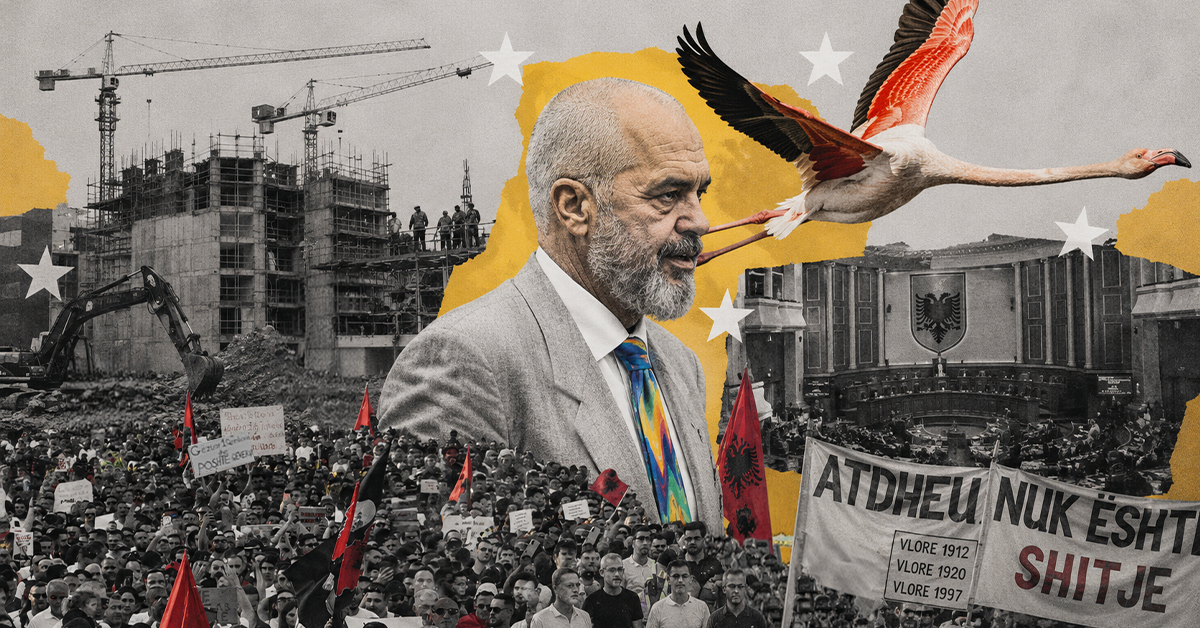
How Rama built his power in Albania
From elections and party politics to local government, media and construction, Prime Minister Edi Rama’s hold on power now faces a new test.
Rama fundamentally changed both the party elite and its mode of operation.
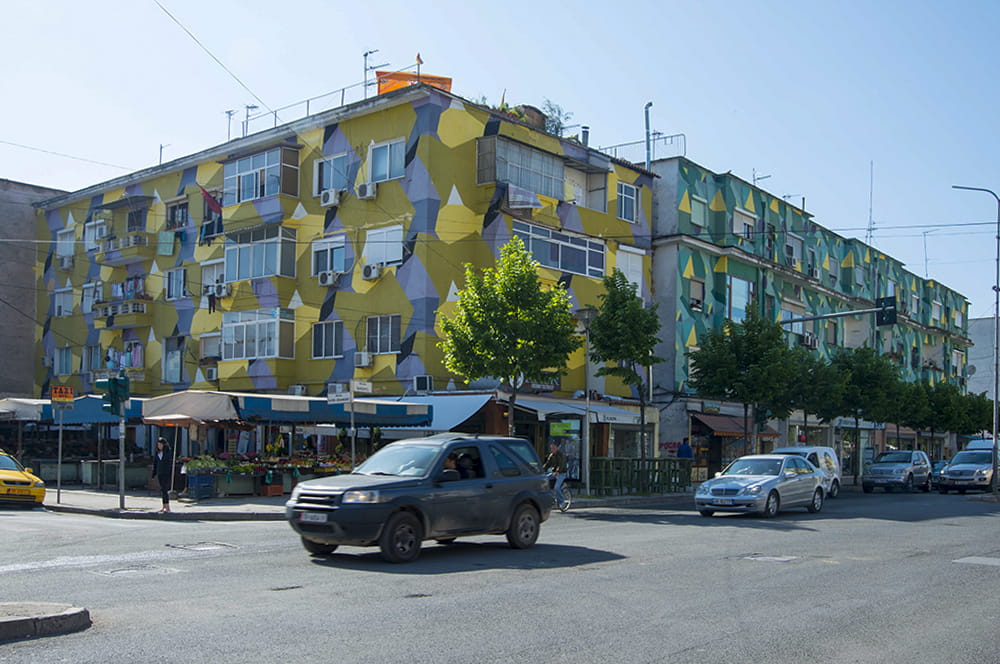
In the early 2000s, the facades of many buildings in Tirana were painted and got a new look. Photo: Olson Lamaj.
The last time the Socialists held a competitive election for their party leader was in 2009.
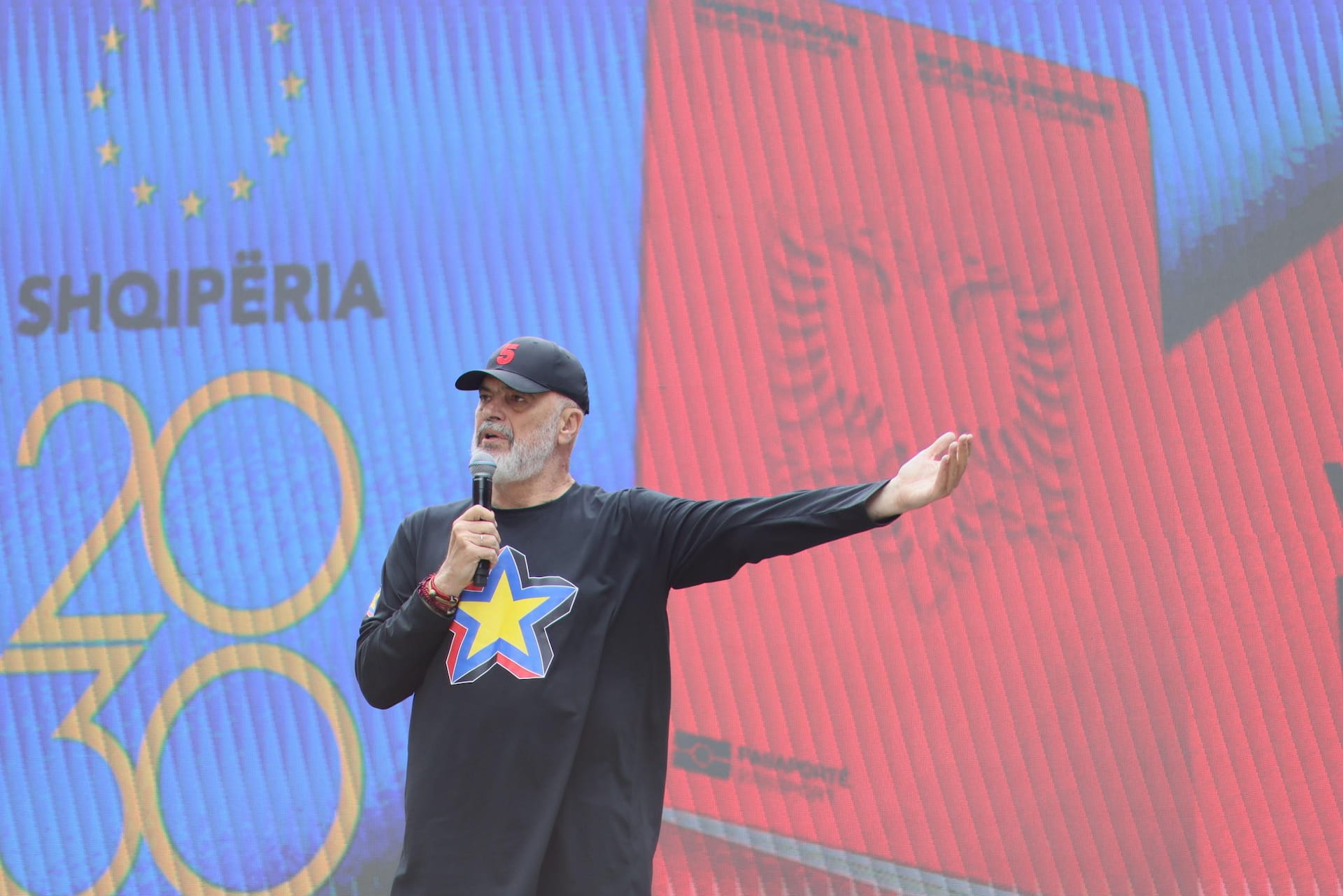
The 2025 parliamentary election secured Rama a fourth consecutive term as prime minister. Photo: Atdhe Mulla / K2.0
The opposition can formally participate in elections but faces formidable obstacles to defeating the governing party.
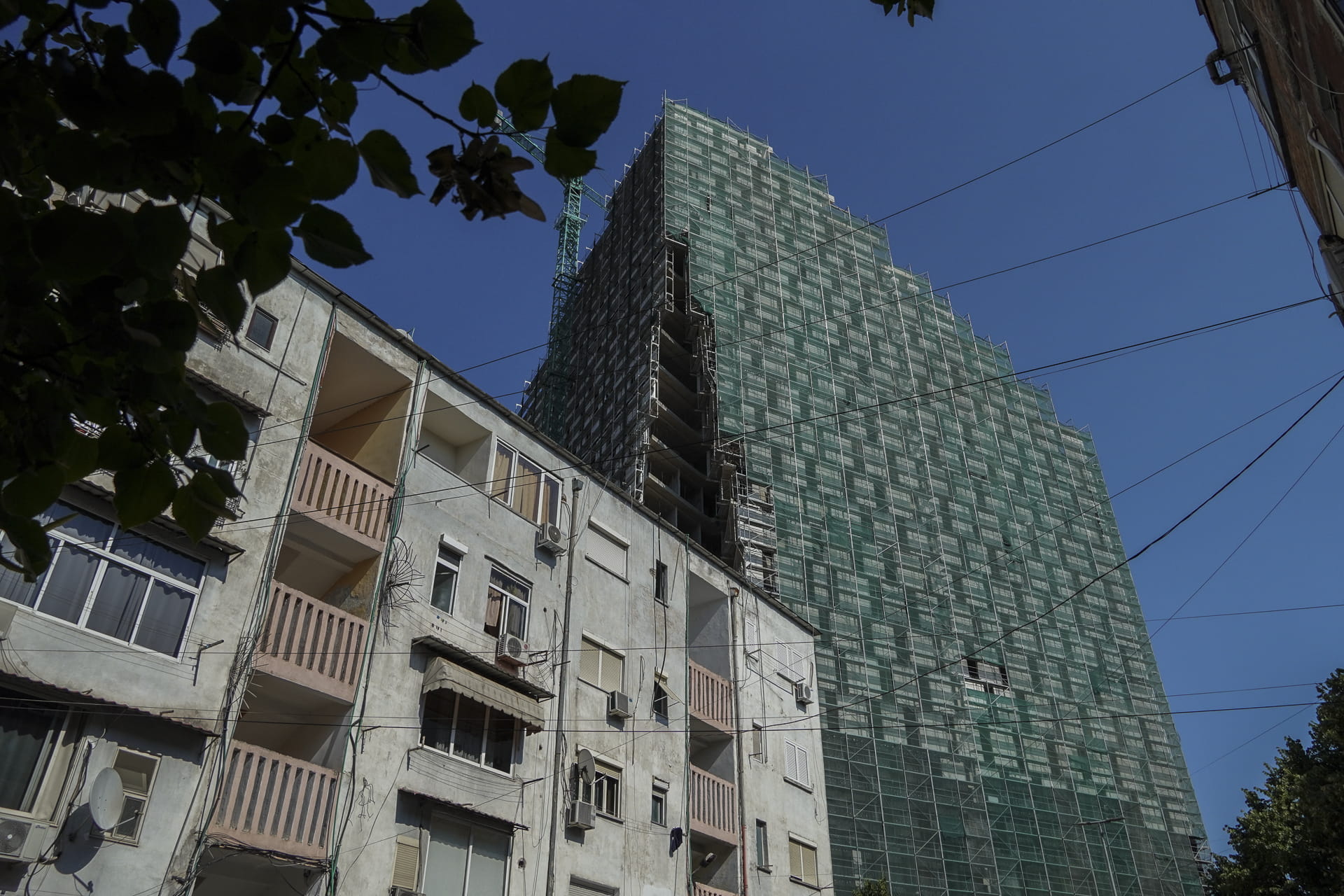
Tirana has experienced a rapid boom in high-rise construction, with apartment prices rising sharply and becoming increasingly unaffordable for much of the population. Photo: Atdhe Mulla / K2.0
The odds are heavily stacked in Rama’s favor. But that does not make him unbeatable.
Rama’s autocratic style rests on convincing the EU that he is its best hope for stability, reform and European integration, while using anti-democratic tools at home to make electoral defeat increasingly difficult.
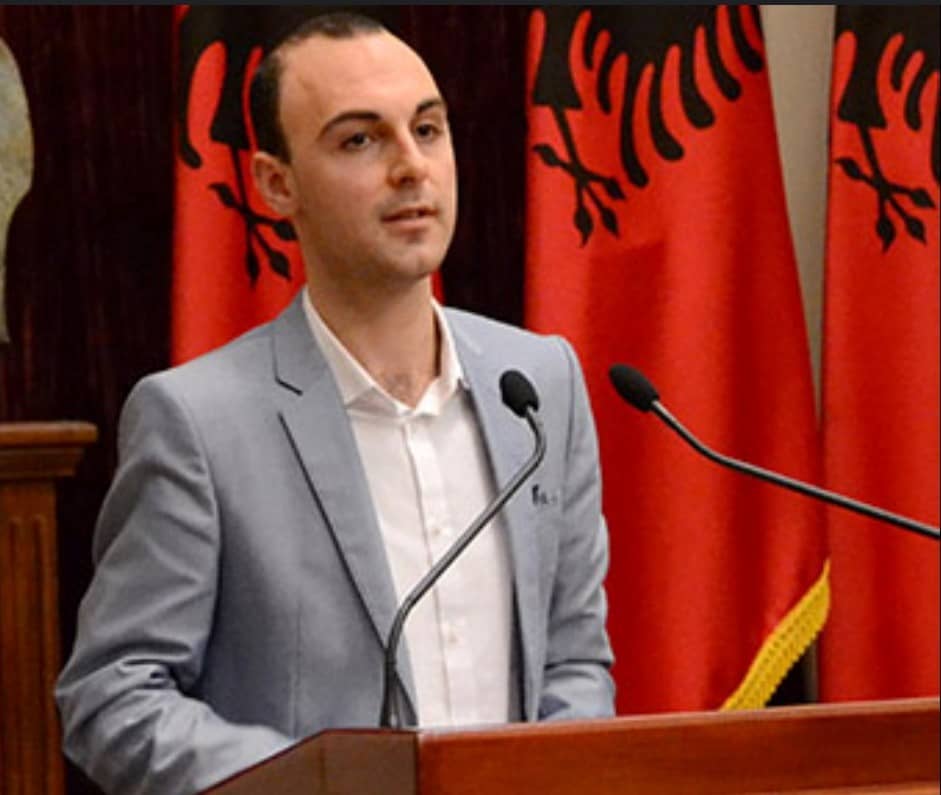
Rigels Lenja
Rigels Lenja is a historian and journalist from Albania, based in Munich. He holds a BA and an MSc in Modern European History from the University of Tirana and a PhD in Modern Balkan History from the University of Munich. His research focuses on democracy, communism, social development, German foreign policy and modern religion.