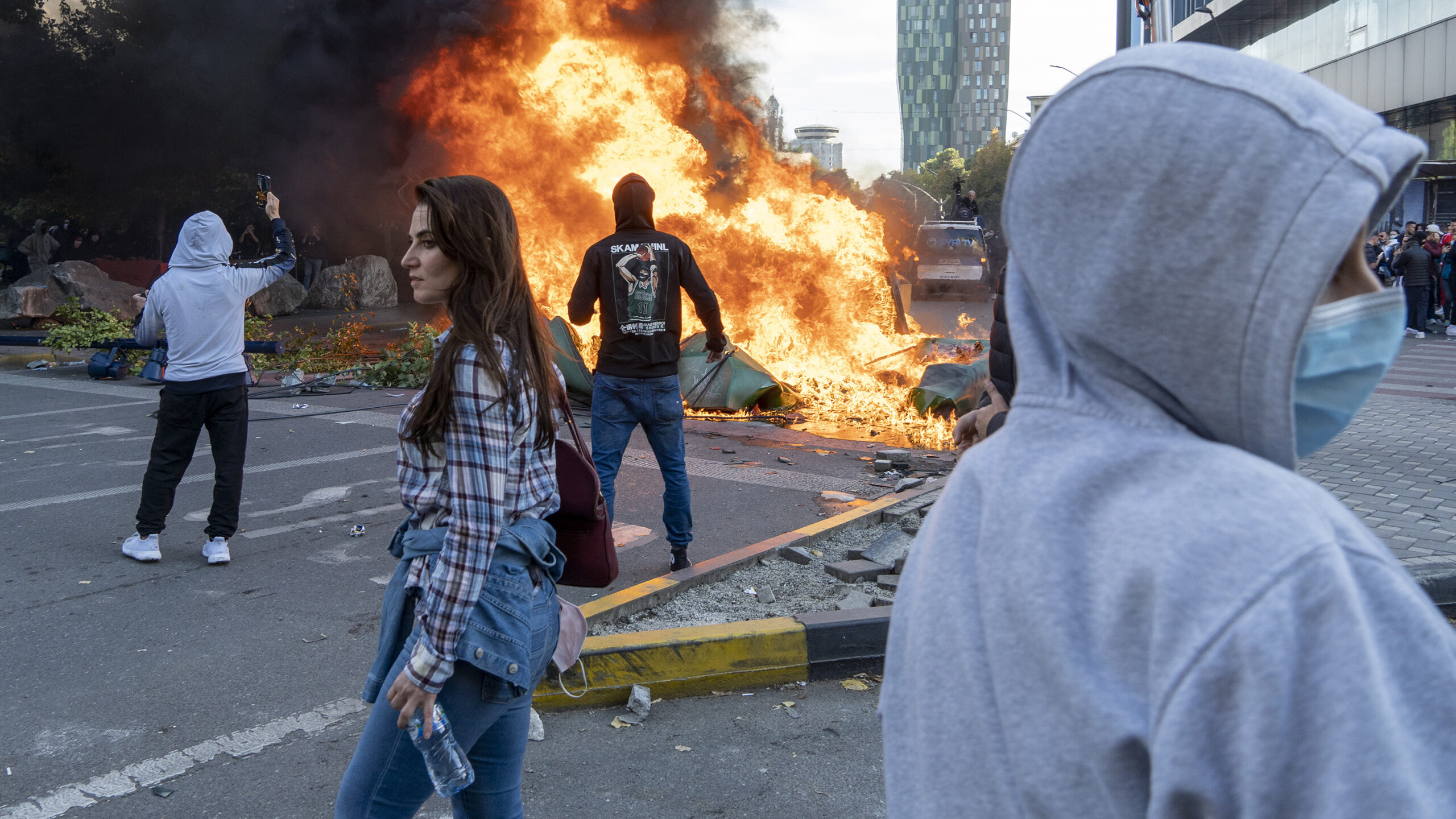
In defense of Gen Z's anger: Why Albania’s protest matter
From rising inequality to shrinking opportunities, Albania’s youth demand a dignified future.
To hear the students in Albania talk about their difficulties shows that whoever is listening doesn’t want to look at the facts.

Demands for better job opportunities, better living conditions and better education are all in line with the struggles that young people in Albania are objectively facing and that will continue to make their lives difficult in the country. Seeing the emotional plight of students and their willingness to continue showing up to protest despite the disproportionate use of force by the police shows just how deeply these issues affect them.
I wonder how arrogant leaders must be, or how rich their circles must be, that they cannot recognize the plight of young people for the crisis that it is. I was touched when I saw an interview with a young girl protesting in Albania describing her reasons for joining the protest. She said she had no family left in Albania, as they had all migrated. She had chosen to stay, yet she saw no prospects. This sentiment is not unique.
Despite the data on inequality and young people, the playbook of leaders in the region, including Albania’s Prime Minister, Edi Rama, has somehow been guilt-tripping youth about leaving. Building a narrative that young people do not stay because somehow something is wrong with them is a deeply unfair narrative. Instead of placing the blame where it belongs –– with institutions and badly planned policies –– this narrative places it on the very people who suffer the consequences. Why should Gen Z not be angry?
Defending democracy
There have been many reactions to the protests and the violence surrounding them. Here, I would like to single out the violent response of the police, which has been disproportionate and sorely lacking in accountability – including but not limited to, police using tear gas, water cannons and rubber bullets against demonstrators, including minors.
But I think there is an underlying sentiment in the way the protests are being judged –– a lack of acceptance and understanding, and perhaps some discomfort with Gen Z’s anger.
One of the feelings I have had about Gen Z is that we have failed them. We all contributed to leaving them with a state in which they have little room to maneuver. As millennials, who also protest and have protested, I think we have settled for working conditions that we also find abhorrent but have somehow accepted. Gen Z has seen the suffering that overwork, low pay, the need to navigate political party affiliations and a lack of security have inflicted on their families, and justifiably, they do not want the same. And when you voice these concerns and are made fun of instead of listened to, anger seems like a very logical response.
The youth-led protests in Albania, as well as elsewhere in the region, are strong signs for the future of our democracies. People should be able to voice their concerns, that is our prerogative and our right as citizens.
A police force on € 2,500 euro steroids, if you will, is a dangerous act not only against the protesters but against democracy.
The protests in Albania gave me hope that we are still able to scream when there is a fire that endangers us all in different ways.

Lura Pollozhani
Lura Pollozhani is a researcher at the University of Graz, researching social movements in the Western Balkans as well as EU enlargement. Her other research interests include generation Z, radicalization, citizenship practices in divided societies and democratization. She completed her PhD in Law and Politics at the University of Graz, while she was awarded an MSc in European Studies: Ideas and Identities at the LSE.
DISCLAIMERThe views of the writer do not necessarily reflect the views of Kosovo 2.0.