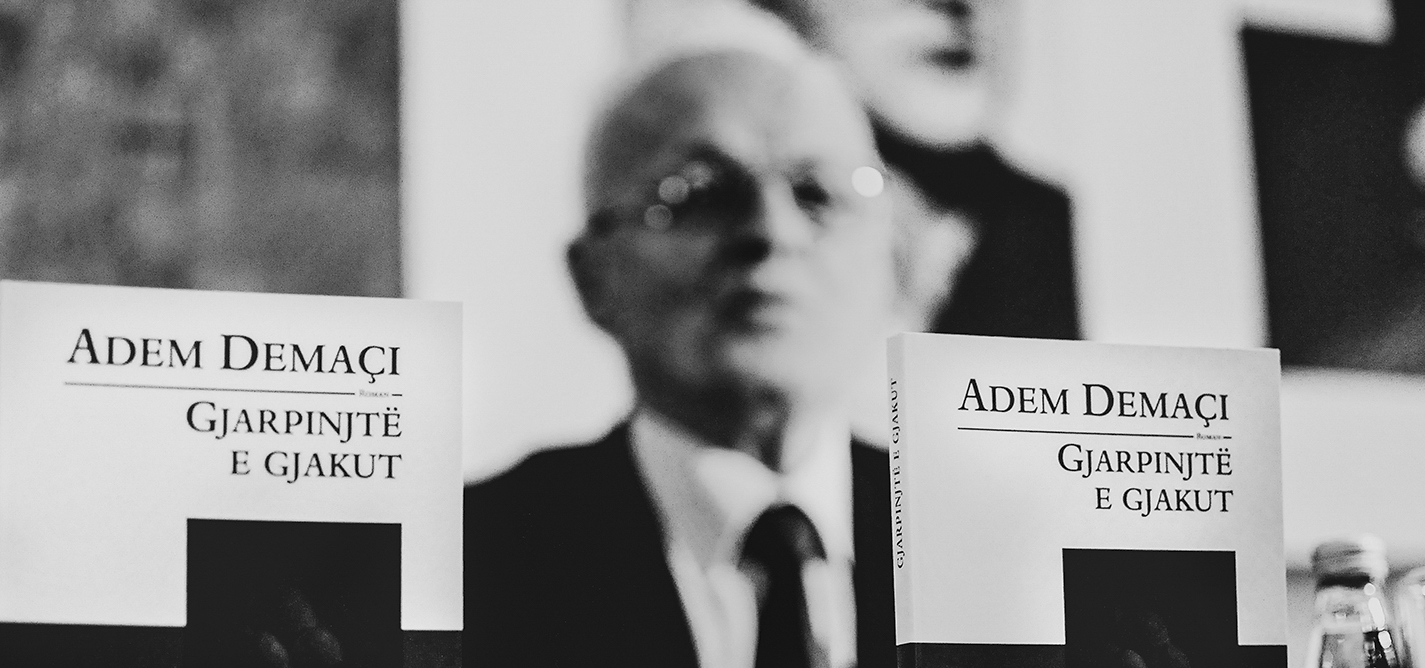
Shkëlzen Gashi: Very few people dared to meet Demaçi
One year after the death of the author and political activist.
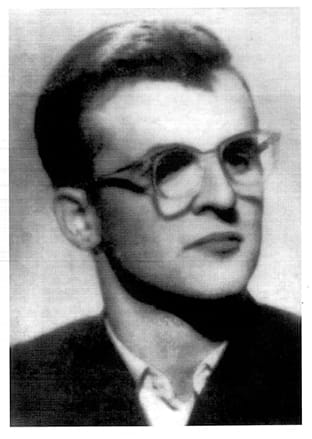
Foto e hershme e Demaçit në moshën 23-vjeçare, e marrë nga libri ‘‘Adem Demaçi, biografi e paautorizuar’’, me autor Shkëlzen Gashi.
The second moment is in 1953, when Yugoslavia’s President Josip Broz Tito signed a gentlemen’s agreement with Turkey’s minister for foreign affairs, Mehmet Köprülü, to ensure the deportation of Albanians from Yugoslavia to Turkey. When I asked Demaçi what moment the most difficult moment in his life, he told me: “the deportation of just about all of my friends to Turkey during the 50s.”The third moment is in winter 1955-56, when the Yugoslav regime began the campaign of weapon collection in Kosovo. Demaçi spoke about how “people were taken from their homes and mistreated, tied up and dragged in the freezing cold, until their skin fell like feathers from a chicken.“They looked for weapons. Naturally, you didn’t have a weapon. They forced you to buy one. Fearing that he would have to go through that torture again, a neighbor of mine hung himself.”
...very few people, besides his close friends and relatives, dared to meet Demaçi. In the streets, many people pretended not to know him.
Demaçi’s opponents, mainly followers of Ibrahim Rugova, objected him for these shifts in political position.
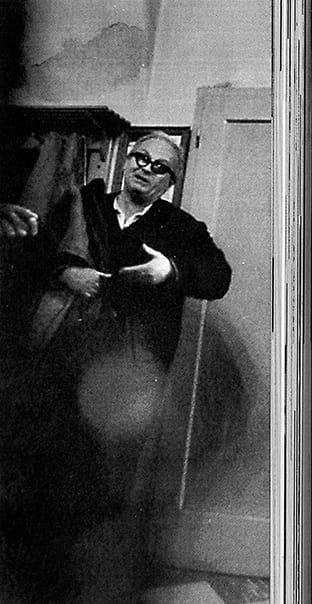
A photography taken from the book “Adem Demaçi, an unauthorized biography,” which is believed to be Demaçi’s only photograph taken during his time in prison.
After being released from prison in 1990, he was engaged in the struggle for Kosovar independence, while in the mid-’90s he worked for the Ballkania project, which foresaw a confederation between Serbia, Montenegro and Kosovo, whereas in 1998, as the general political representative of KLA, he again supported the alternative of Kosovo’s independence.Demaçi’s opponents, mainly followers of Ibrahim Rugova, criticized him for these shifts in political position. However, Ibrahim Rugova was also initially engaged in bringing back Kosovo’s autonomy, which was abolished by Serbia in 1989, and then in making Kosovo into a Republic within Yugoslavia, and then in achieving Kosovo’s independence and sometimes he mentioned the unification of Kosovo with Albania as an option. In the mid-’90s, Rugova proposed to turn Kosovo into a UN protectorate; in 1999 in Rambouillet, he signed for substantial autonomy under Serbia and Yugoslavia and ultimately, after the war, he was again engaged toward the alternative of Kosovo’s independence.The ultimate objective of both was freedom and independence for Kosovo. The changes in political positions in certain circumstances and periods of time were political strategies to achieve the ultimate objective.
After the war in Kosovo (1998-99), Demaçi visited just about every settlement of Kosovo minorities and encouraged their members to stay in Kosovo, and simultaneously called on Albanians telling them not to attack minorities and saying that minorities were Kosovo’s fortune.

Ngadhnjim Avdyli
Ngadhnjim Avdyli is a former K2.0 staff journalist, covering mainly politics, governance and social justice issues. He has a degree in journalism from the University of Prishtina.