Where is the dialogue heading?
Ohrid's lost momentum.
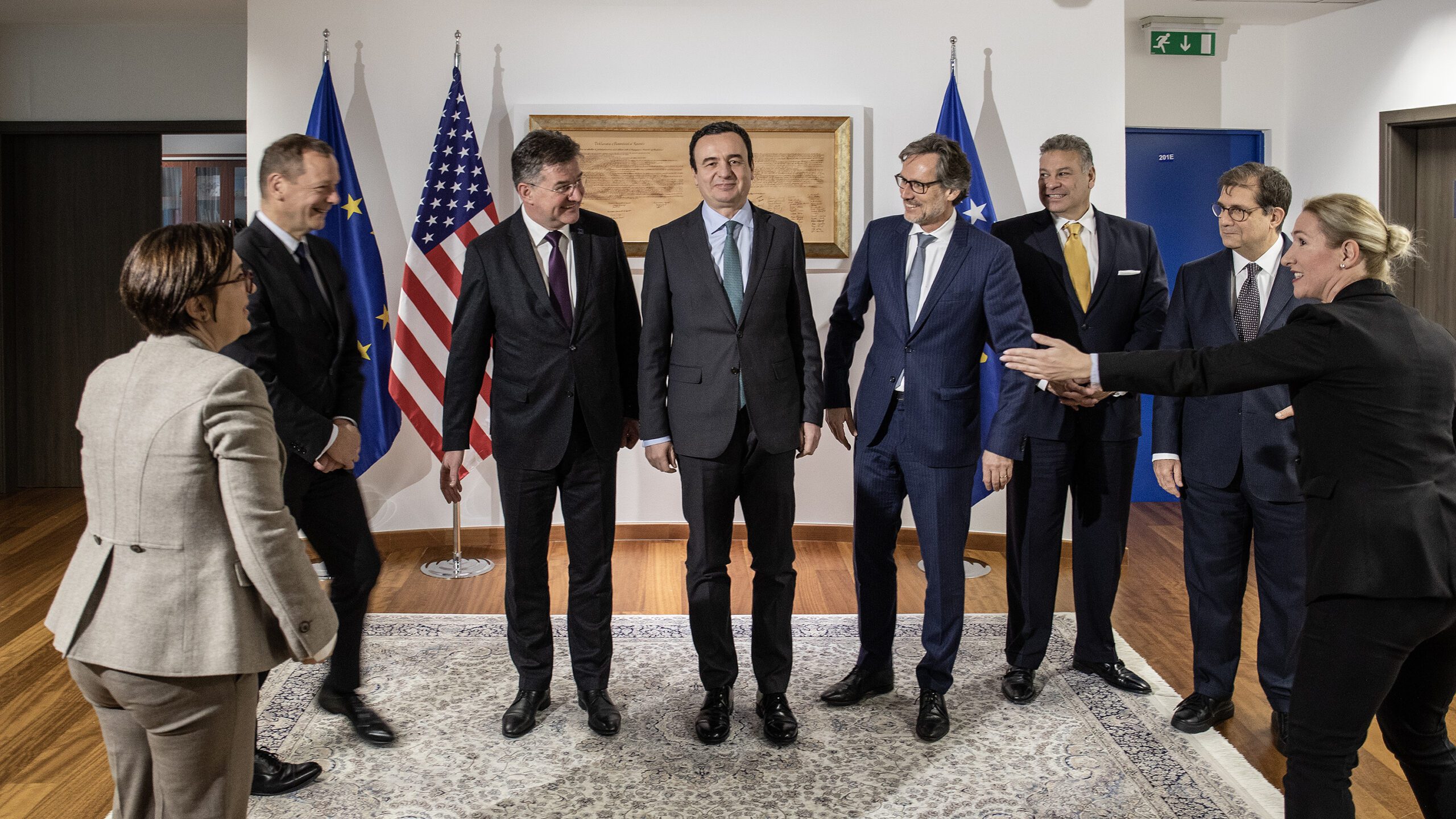
The October 26 meeting took place against a backdrop of already strained relations between Kosovo and the EU, which had imposed punitive measures on Kosovo.
Implementing the Ohrid Agreement meant that both sides would gain something in exchange for the concessions they would make.
According to Maliqi, neither government was interested in implementing the agreement; instead, they exploited tensions between Kosovo and Serbia for domestic political consumption, using them to construct narratives that served their own interests.
According to Augustin Palokaj, it became clear that Serbia had no intention of starting implementation when progress in implementing the agreement was expected to begin.
With EU punitive measures already in force and the Banjska attack occurring in the interim, dialogue came to a standstill.
Kosovo's obligation to implement the Association became clear in 2016, when the Kosovo Constitutional Court examined the guiding principles for its establishment.
According to Maliqi, the Association issue has been so politicized that it has become a myth, and now the myth has taken on a life of its own.
The actions taken over the last three years in the Serb-majority municipalities became one of Kurti's main campaign cards.
The government's actions created at least two camps of opinion within the Albanian community.
Lazarević argues that the Kosovo government has consistently prioritized legal authority over political dialogue, failing to build credible channels of trust at the local level.
Political developments pushed the relationship with Serbia back to the center of the agenda throughout the entire mandate, while internal dialogue with Serbs never took place.
Kosovo's challenge does not end with extending sovereignty within the country. Equally decisive remains the question of international recognition of its sovereignty.
"This is also a failure of the EU because it demonstrates that it has not built dialogue on any continuing track — where one could say that dialogue continues regardless of who is in power," says Palokaj.
"I see neither the will nor the drive in Kosovo or Serbia to join the EU. Especially not them making compromises that are identity-based," said Maliqi.
Gentiana Paçarizi
Gentiana Paçarizi is a journalist and holds a master’s degree in Journalism and Public Relations from the University of Prishtina “Hasan Prishtina.” She served as Managing Editor at K2.0 from 2022 to 2026.