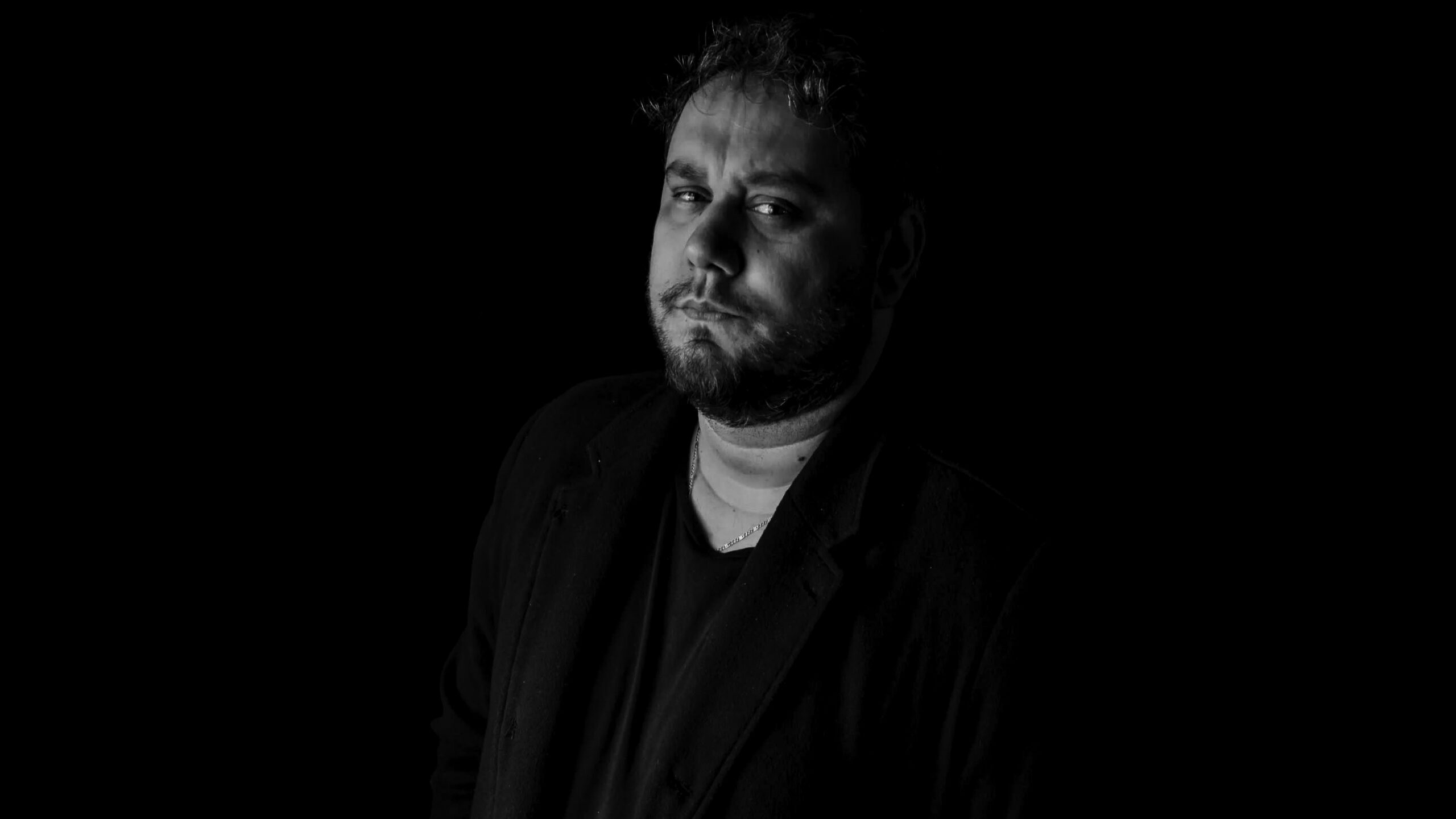
Liridon Mulaj: Futility is present in all daily acts
Mulaj talks about the existentialist approach to writing.
Society has become fragmented, and perhaps this division is also the reason why we are so similar today in our routines and in our aesthetic, collective tastes.

I have found the meaning of life only in literature, in writing and later in my wife, who joined me on this journey at my darkest moment, and has not let go of my hand until today, when, in my opinion, we’ve just reached the shallows. I have also found meaning in my son, who now constitutes the core of my life and dictates everything I want and aspire to.
But futility persists and often rears its head — from the moment I open my laptop to write and ask myself who the hell my novels are for in a world headed toward war, to the process of the book being published, or to when I am confronted with a lack of readers or even interest from state institutions. At this point, each book resembles a message in a bottle that will never be opened, that wanders the seas of the world without an address. This, too, is a measure of futility, in its purest form

In the hectic life that I lead, with parental, marital and economic obligations, I do not have the luxury of not saving the fragments I create in my mind. I even use my phone to record fragments that come to me naturally. I write rarely, but when I sit down, I can write several chapters at once because I know most of the work comes later, during organization and final editing. I also have fragments that I have written almost in a state of hypnosis, and this, I believe, is the peak in every novel I have written.
I have published five books in ten years, which, in my opinion, is a good pace — one that has allowed me to think about the quality of the manuscript carefully, but also about the reader, who, amid this cacophony and constant bombardment of books and writers, has to have some kind of longing for me — to miss me.
Ultimately, what you write, among other things, should also entertain you, make you happy — not necessarily for its essence or message, but for the way you experience the process itself.
Tirana now exists for me only as a source of literature. As a city to live in, it has lost its meaning over time, and my love.

Arian Lumezi
Arian Lumezi is a journalist and holds a master’s degree in International Journalism from Cardiff University, pursued through a Chevening scholarship.
This story was originally written in Albanian.