Memorials and memories from the periphery
Recollections of World War II in Kosovo.
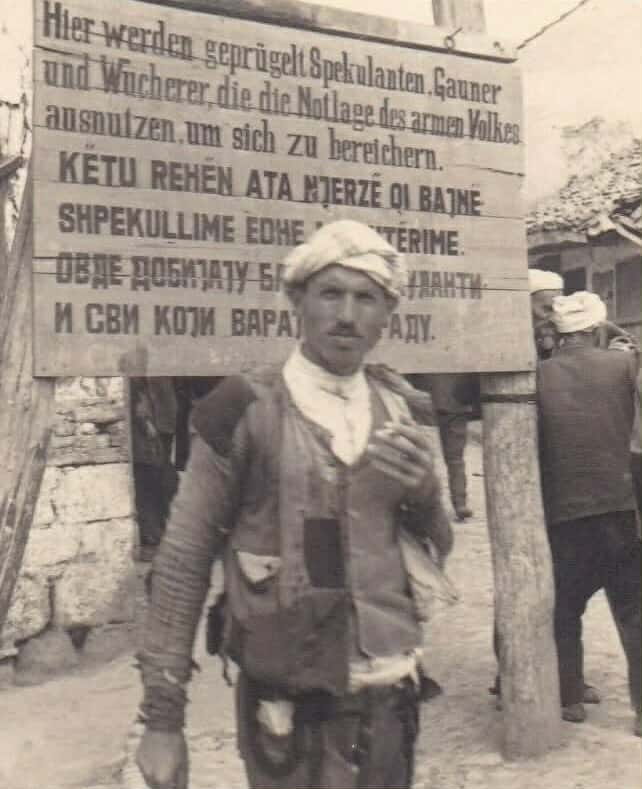
Mitrovica, 1944. An Albanian man smoking in front of a notice board. Photo: Open source online.
In the foreground of this photograph stands a middle-aged Albanian man, posing for the camera with a cigarette in hand, dressed in patched-up clothing and tjerq galana — traditional men’s trousers in brown wool adorned with black braided embroidery. The wooden board in the background, featuring a roughly identical warning notice in German, Albanian and Serbian, is more noticeable than the man himself. The German text reads: “Here, speculators and swindlers are beaten, as well as usurers who exploit the difficult plight of poor people to enrich themselves.” Below the German text, the Albanian notice is written in two rows, in capital letters, and reads: “Beaten here are those who speculate and deceive.”
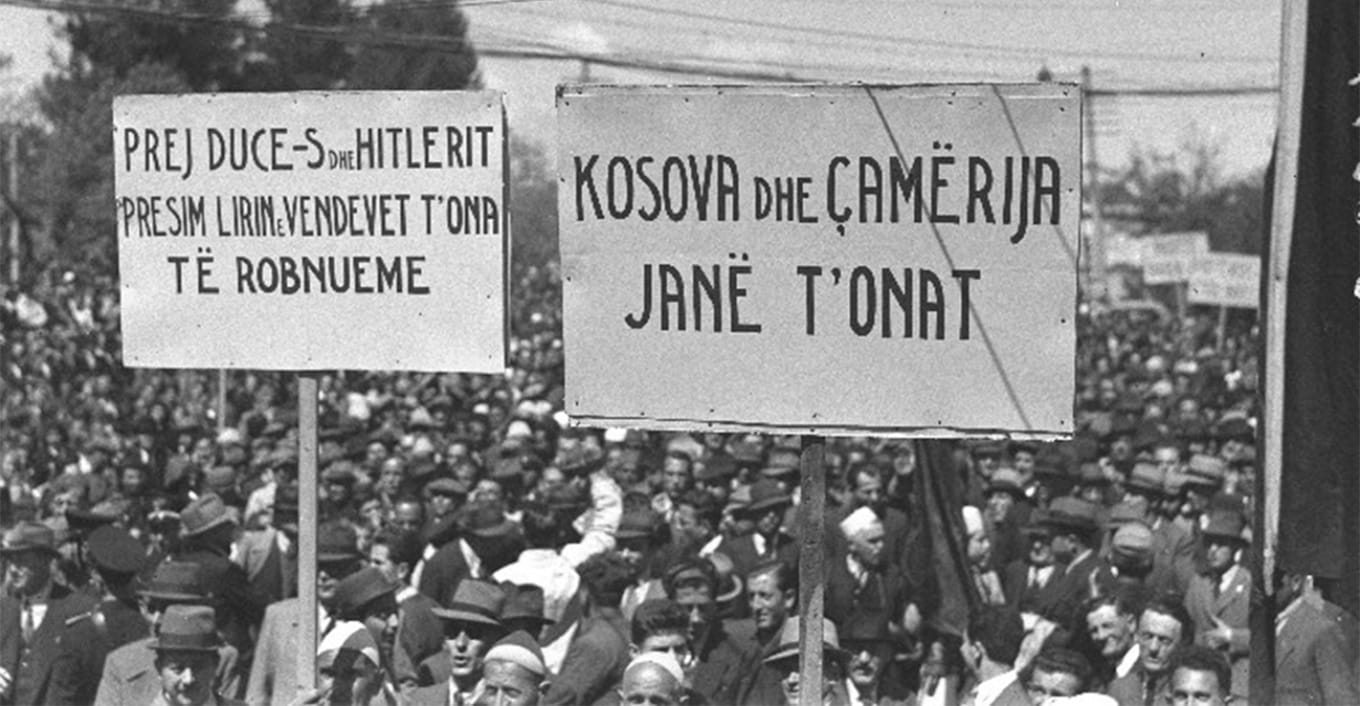
Albanian citizens in a protest rally demand the liberation of Kosovo and Chameria as well as their unification with Albania. Photo: Open source online.
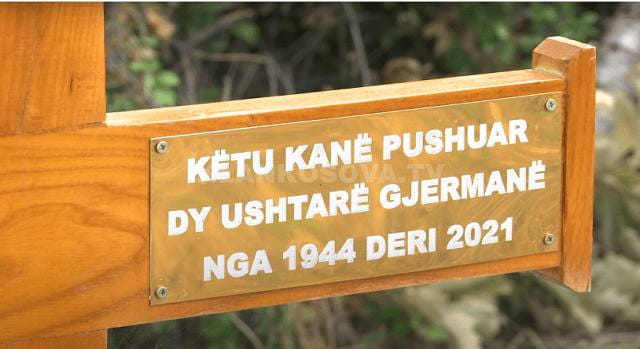
Popova, 2021. A wooden cross commemorates the former burial site of two German soldiers. Photo: Durim Abdullahu / K2.0
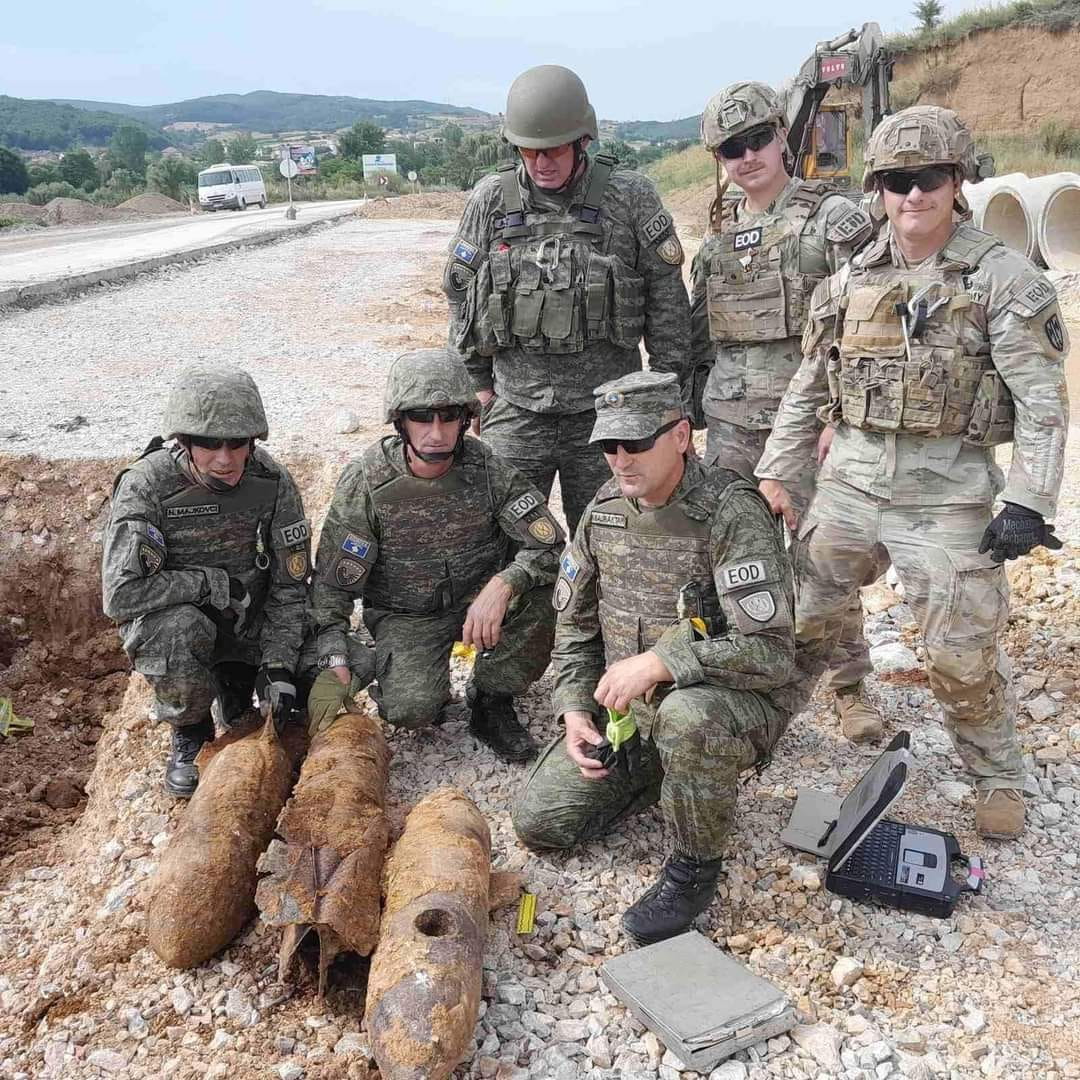
Demining teams from the Kosovo Security Force (KSF), together with their KFOR colleagues, located three German-made shells. Photo: KSF Archive.
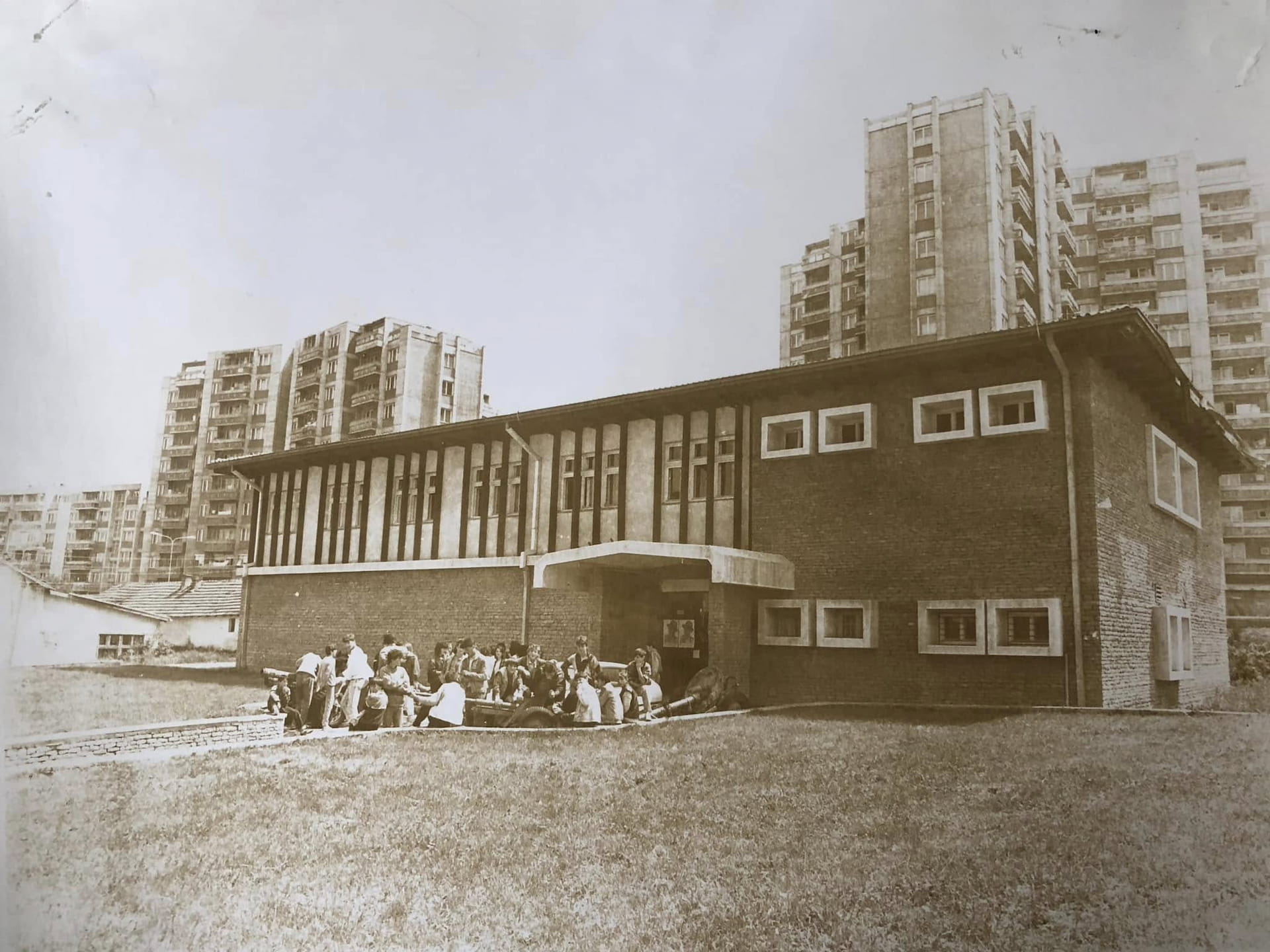
A photograph from the 1970s showing visitors gathered around weapons displayed in the courtyard of the Museum of the Revolution, located in Prishtina. Photo: Oral History Kosovo.
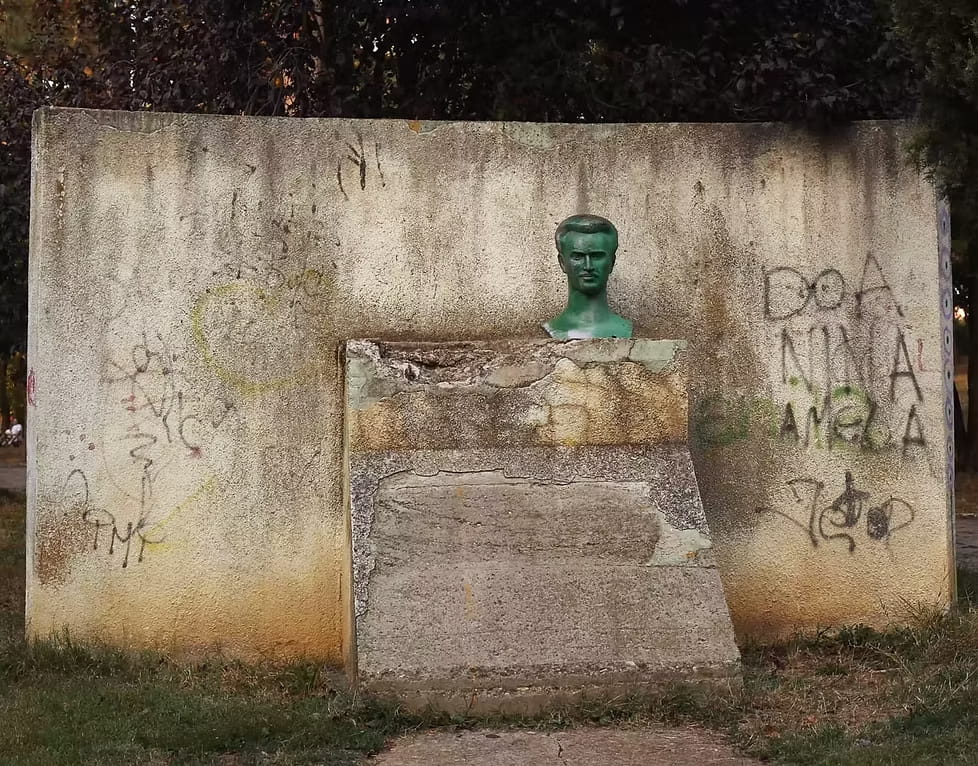
Photo: Durim Abdullahu / K2.0
Today, only the bust of Ramiz Sadiku remains of the park memorial; until mid-1999, the bust of Boris Vukmirović also stood to his right, but in 1999, immediately after the war, it was removed and disappeared.
The duo Boro and Ramiz were also memorialized in 1963, when a 10-meter-high obelisk, designed by Miodrag Pecić and Svetomir Basara, was erected at the site where they were killed.
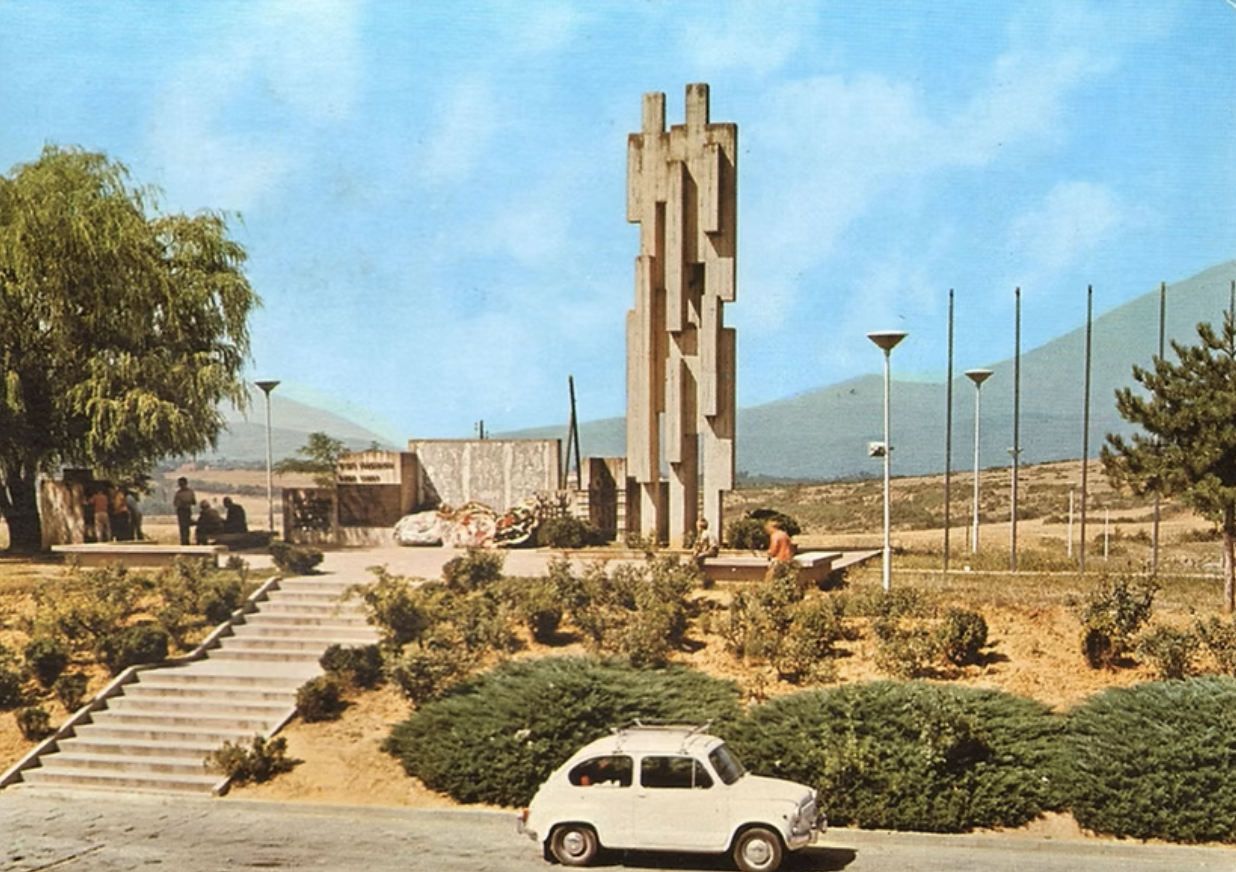
Landovica, the Boro and Ramiz monument, photographed in the 1970s. Photo: Open source online.
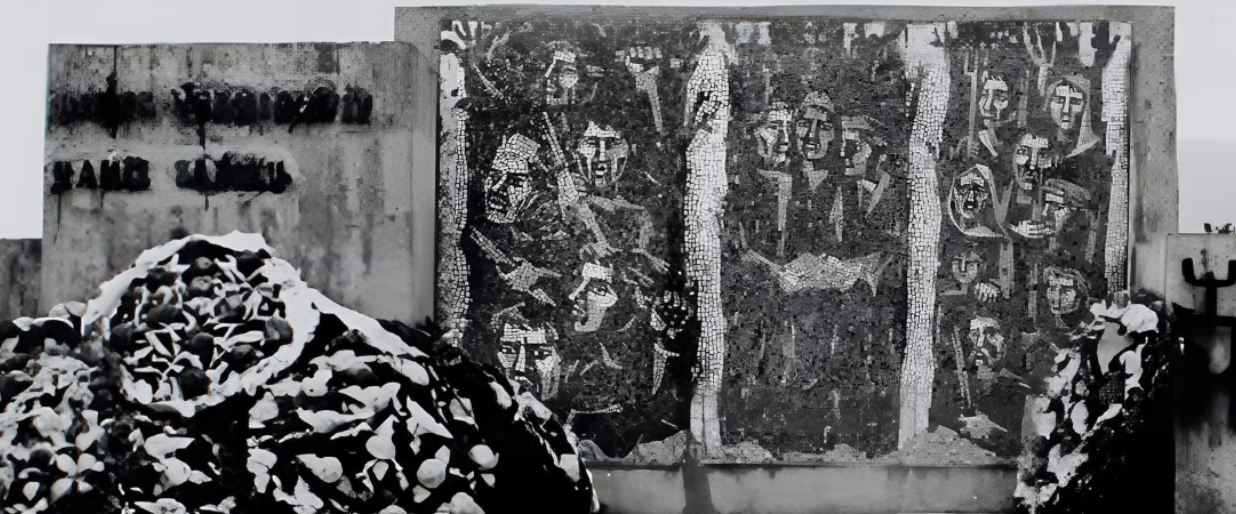
Landovica, the mosaic created by Mirjana Barać at the Boro and Ramiz monument. Photo: Open source online.
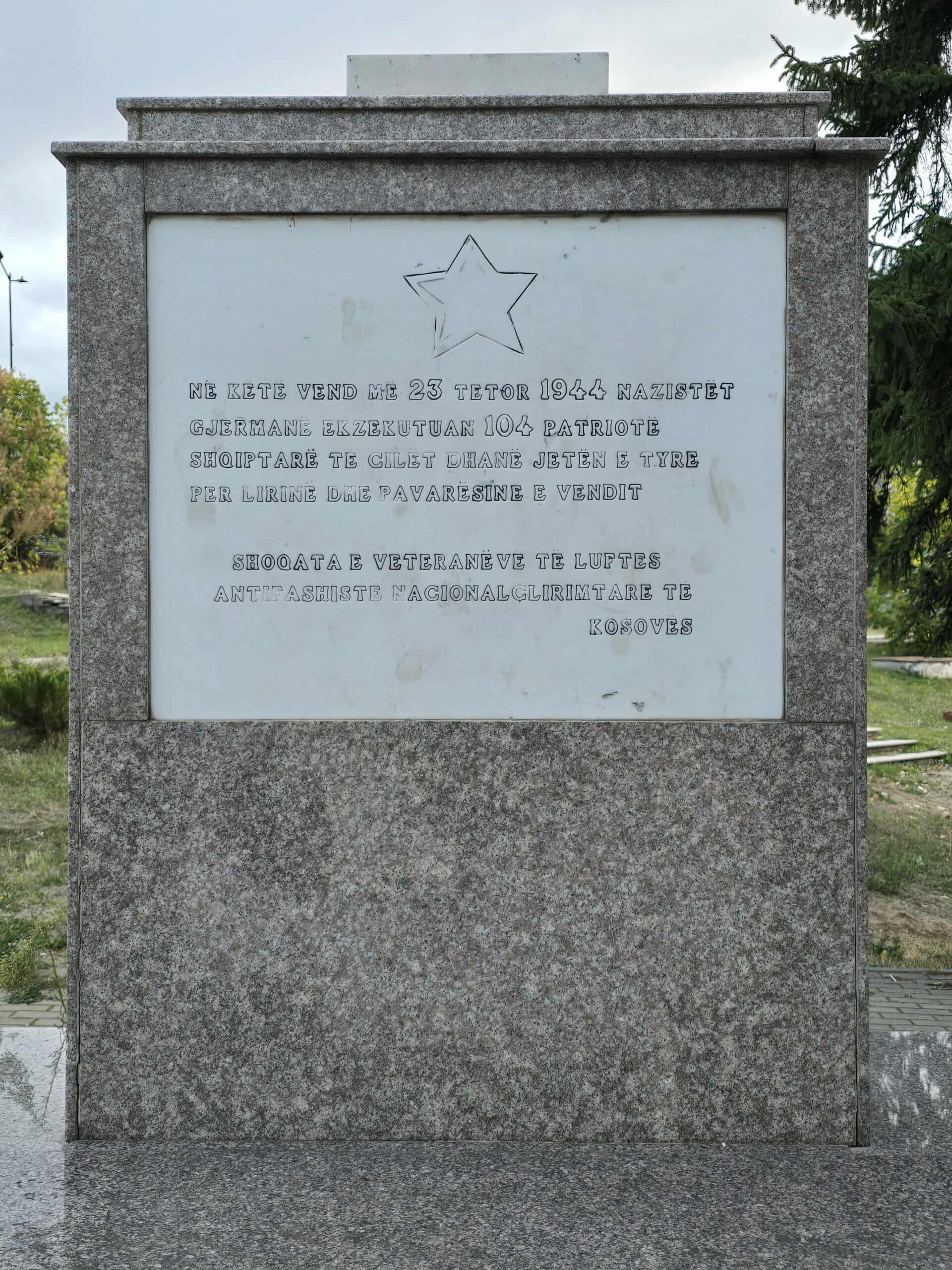
Prishtina, the damaged memorial to the 104 Albanians executed on October 23, 1944. Photos: Durim Abdullahu / K2.0
This monument commemorates the executions that took place in WWII. In an issue of the weekly newspaper, Bashkimi i Kombit (National Unity), dated October 24, 1944, it notes:“On Dibra Street, on the night and dawn of October 21, a heinous assassination attempt was carried out against a German vehicle. The patience of the German armed forces has come to an end. Punitive measures: 1. The neighborhood surrounding the site of the incident on Dibra Street will be demolished. 2. 100 communist prisoners from Tirana, who belong to the intellectual rank and are currently being held at the Prishtina concentration camp, will be executed immediately in retaliation. 3. 80 known members of the National Liberation movement in Tirana will be held hostage, and in the event of another attack against members of the German army, they will be hanged. The Command of the German Armed Forces in Albania.”
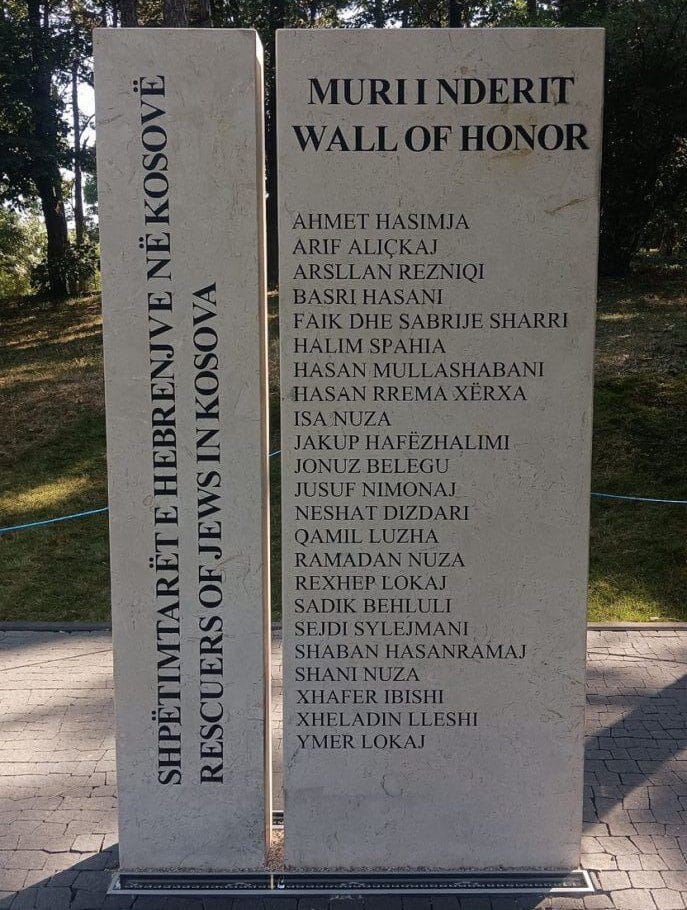
Prishtina’s City Park. The Wall of Honor is inscribed with the names of Albanians who rescued Jews. Photo: Durim Abdullahu / K2.0
Photo: United States holocaust memorial museum, courtesy of the Jasha & Ester Franses Altarac archive.Photo: United States holocaust memorial museum, courtesy of the Jasha & Ester Franses Altarac archive.This memorial was built and inaugurated just two years ago, on August 23, 2023, through the initiative of the Kosovo–Israel Friendship Association and the Albanian-American Foundation. Referred to by its bilingual inscription “Muri i Nderit / Wall of Honor,” this memorial consists of a plaque that is about two and a half meters high, next to which is written: “Shpëtimtarët e hebrenjve në Kosovë / Rescuers of Jews in Kosova.”
Belgrade – Prishtina – Tirana: A Rescue Route from the Holocaust. Photo: Open source online.
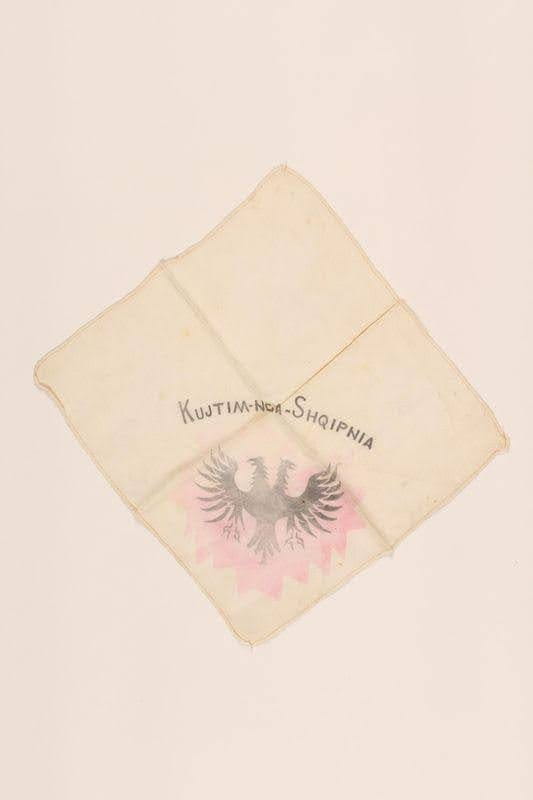
This white handkerchief, featuring the Albanian national symbol — the double-headed eagle — embroidered with the inscription “Kujtim nga Shqipnia” (A Memory from Albania), belonged to a seven-year-old Jewish boy, Jasha Altarac, who survived the Holocaust thanks to the assistance of Albanians. During the invasion of Yugoslavia by German troops in April 1941, a bomb struck a house in Sarajevo where the Altarac family — who had fled Belgrade as refugees — were taking shelter. The explosion killed Jasha’s grandmother and sister, Lea. Following their burial, Jasha’s parents, Majer and Mimi (Merjana) Altarac, returned to German-occupied Belgrade.
Before the outbreak of WWII, Majer Altarac was one of the most prominent architects in Belgrade, having discovered several sources of marble and other stones in quarries throughout Yugoslavia, which he used for his architectural projects.
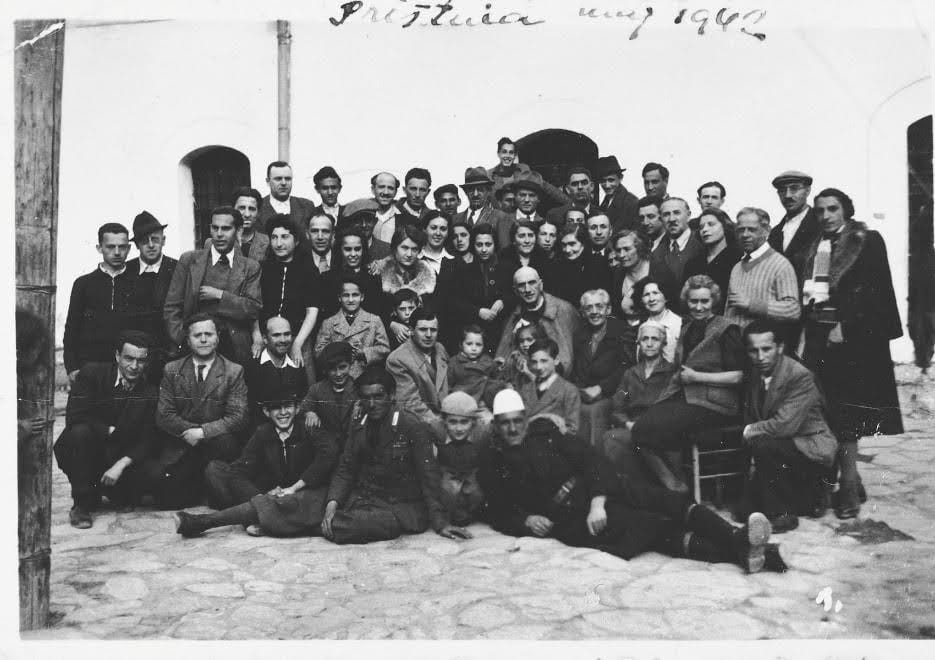
Photo: United States Holocaust Memorial Museum, courtesy of the Jasha & Ester Franses Altarac archive.
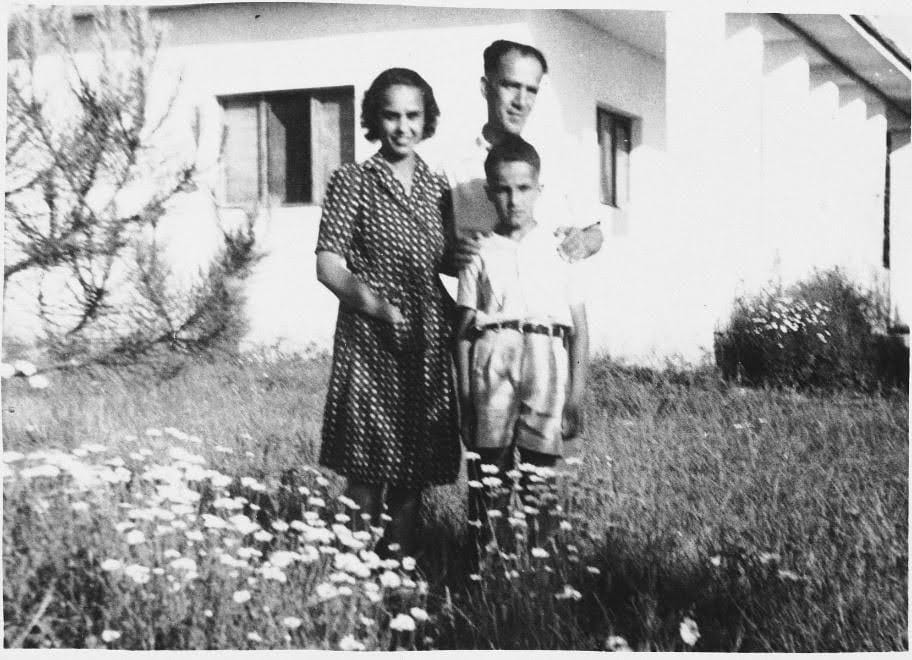
Kamëz, 1944. The Altarac family sheltered on the Toptani family property. Photo: United States Holocaust Memorial Museum, courtesy of the Jasha & Ester Franses Altarac archive.
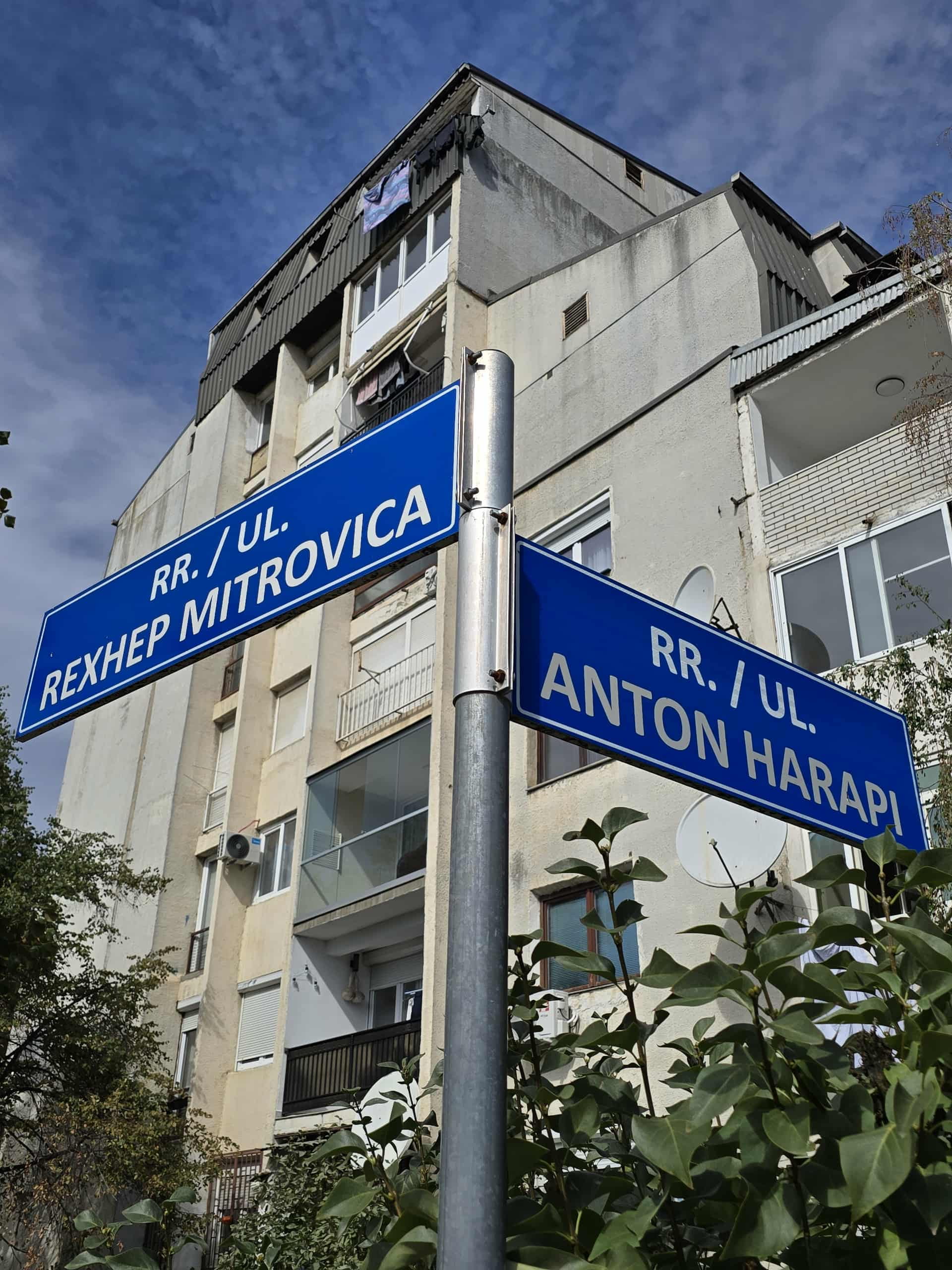
Prishtina: Dardania neighborhood. A signpost with two street names. Photo: Durim Abdullahu / K2.0
The names of some of these individuals can be found today on street signs despite the fact that their unwritten biographies provoke much public debate and despite their roles and policies as collaborators of Italian Fascists and German Nazis. In some cases, their names appear side by side, as they do in the neighborhood of Dardania in Prishtina. There, two small streets near the Dardania school honor Rexhep Mitrovica — who was the Prime Minister of Albania during the German occupation from November 4, 1943, to July 18, 1944 — and Anton Harapi, a Catholic priest who, with permission from the Holy See, served on the High Regency Council from September 13, 1943, to the end of 1944, during Nazi occupation.