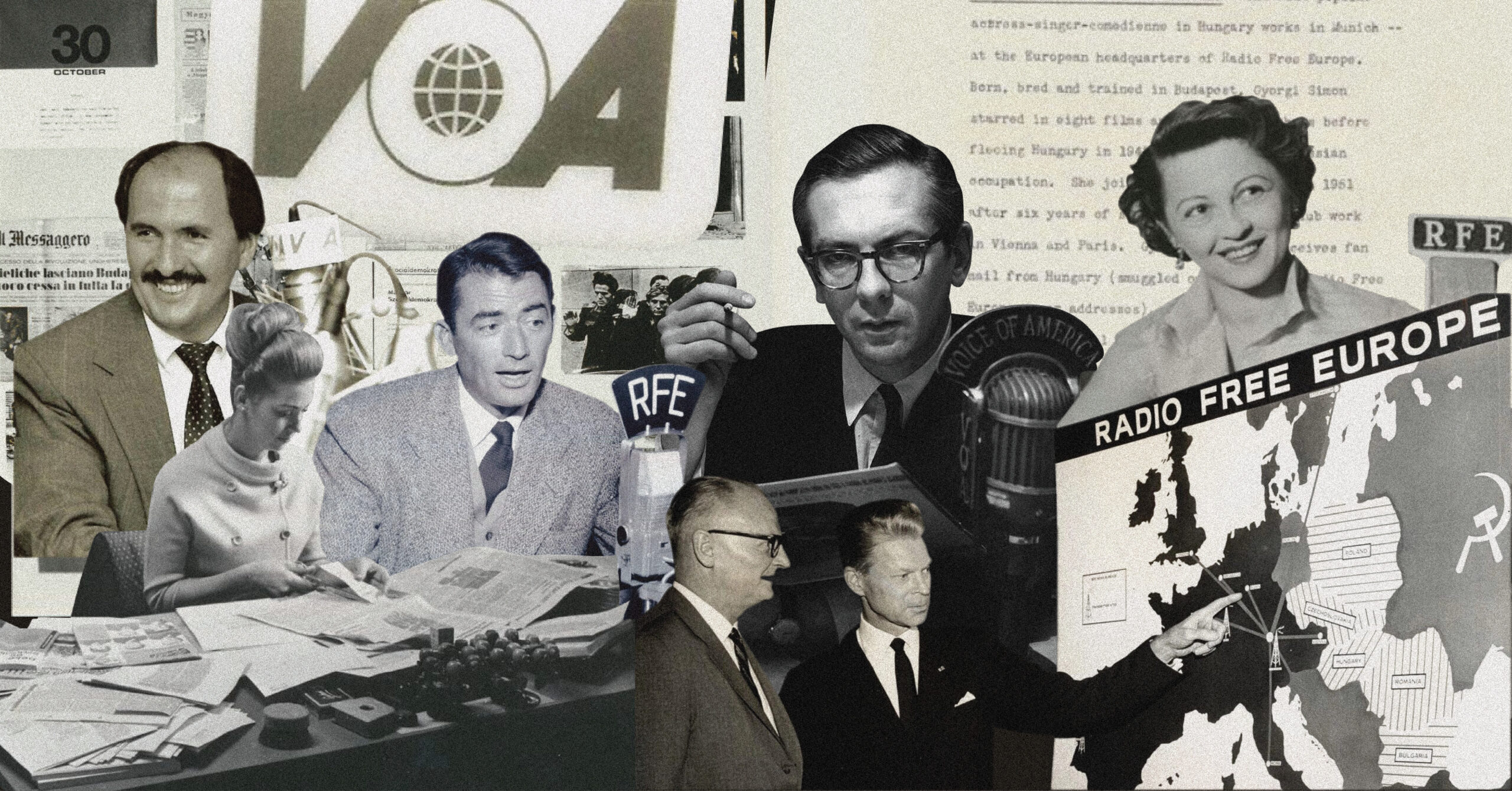
This intimate proximity to the voices of the radio was not accidental.
Until that year, reporting on Kosovo had been sporadic, and the lack of local correspondents had forced outlets to rely mainly on official Yugoslav sources.
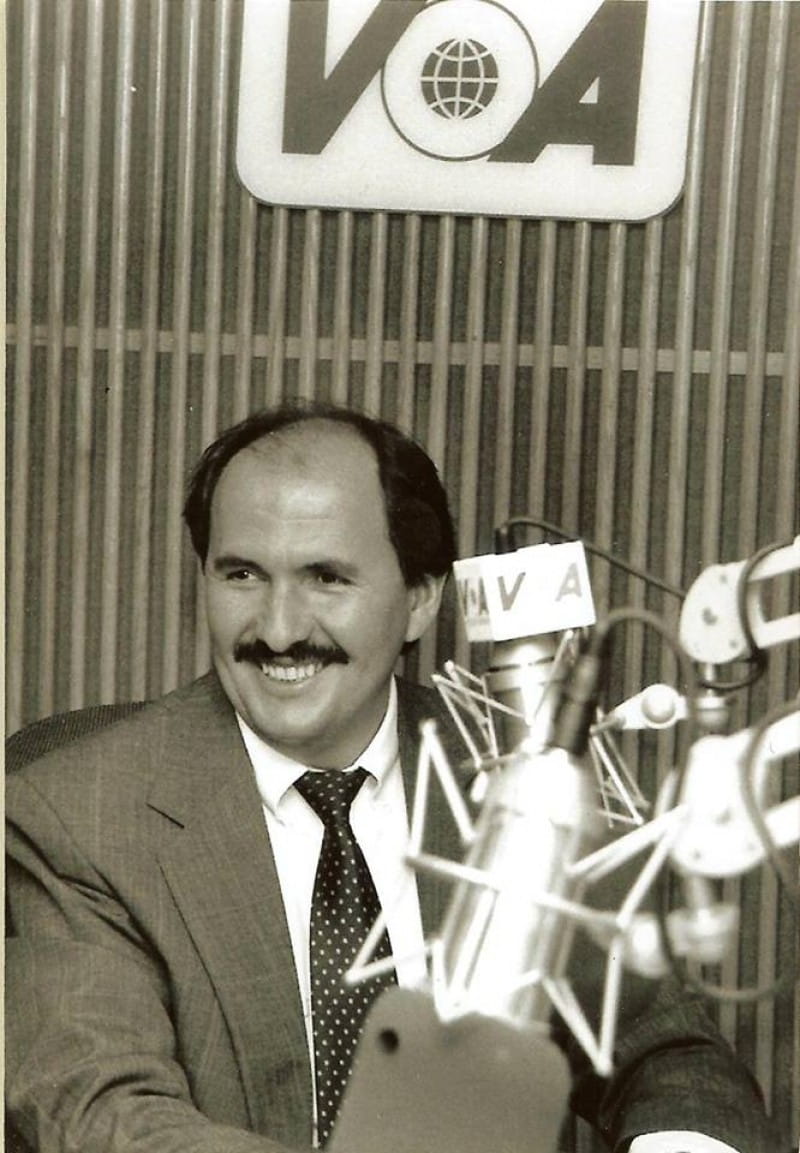
Elez Biberaj, who began working at VoA in 1986 and led the Albanian service during the war in Kosovo, played a crucial role in building a bridge between VoA and the Albanian political leadership. Photo: Biberaj’s Facebook archive.
The dual role that VoA played, as a means of information and as an instrument of US soft power, has permeated the history of this medium since its founding in 1942.
After the end of World War II, the clashes between two different models of political and social organization, the American and the Soviet, intensified and turned into a global competition for influence and ideological and cultural dominance.
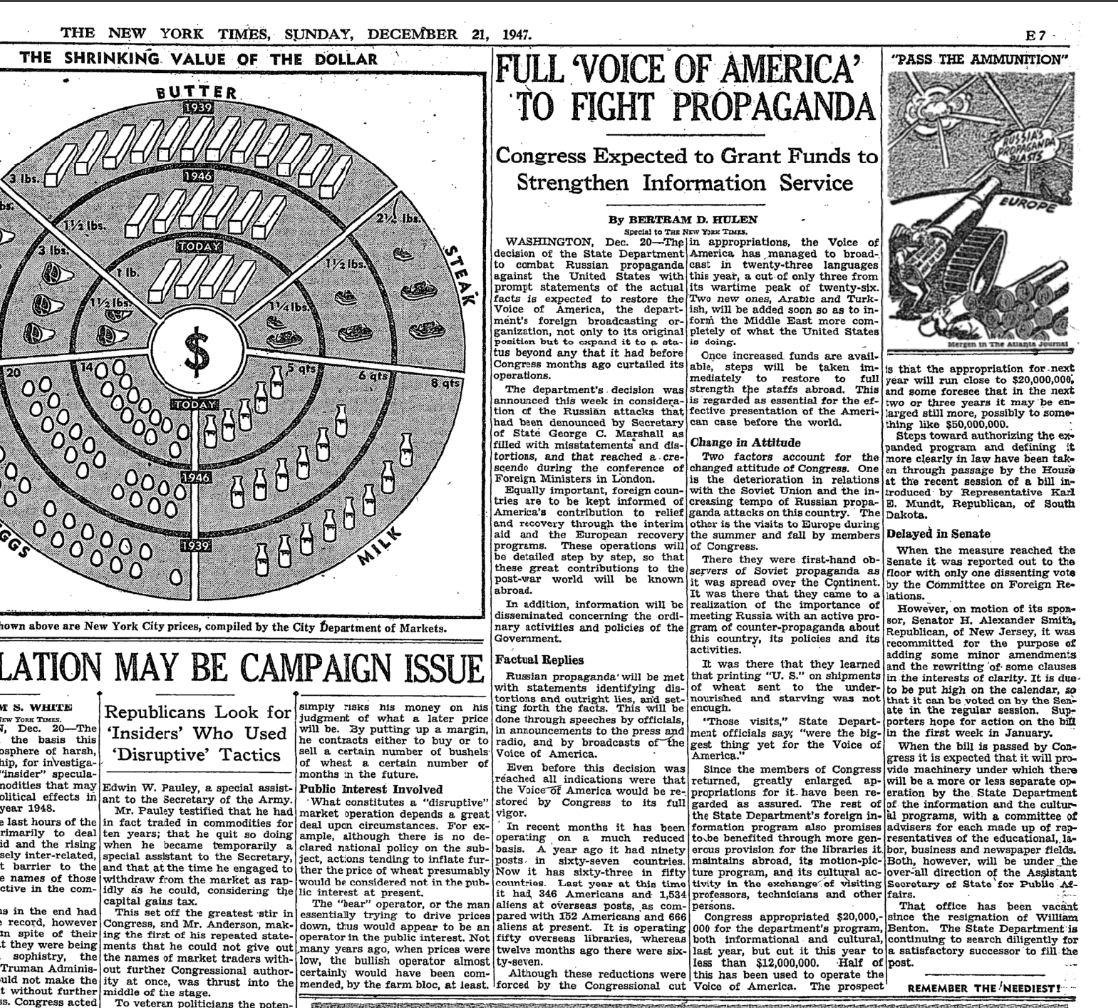
The Smith–Mundt Act established VoA as part of American public diplomacy. Photo: New York Times Open Archive.
VoA embodied what the American political scientist Joseph Nye would define as “soft power.”
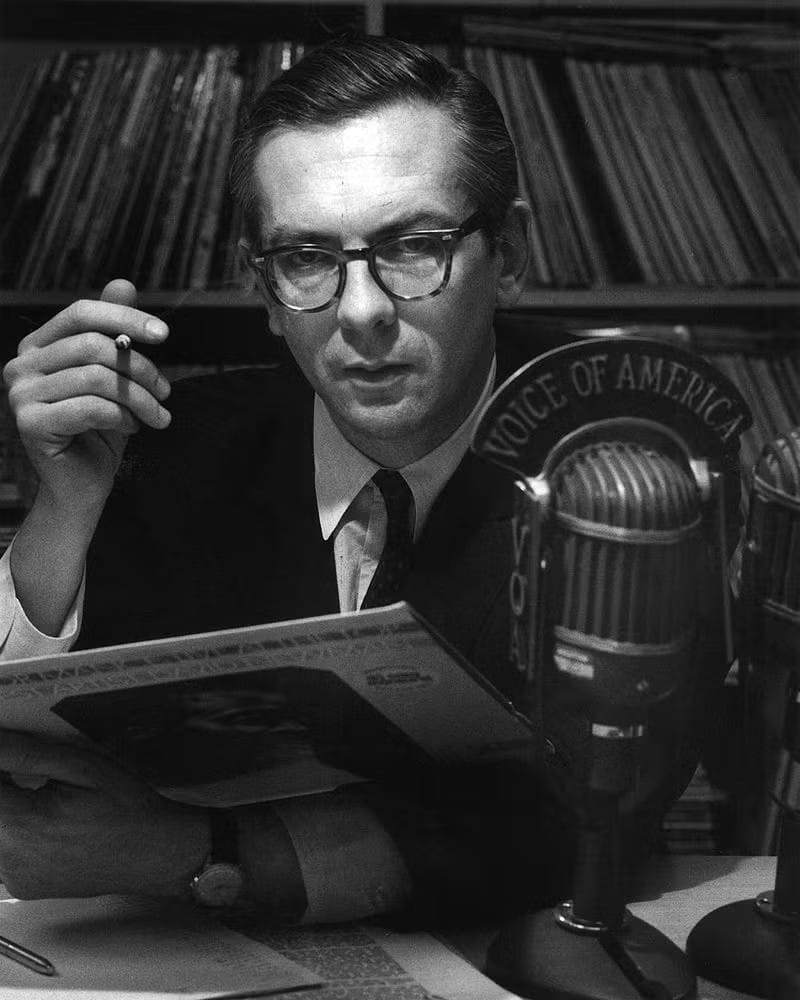
Willis Conover remained relatively unknown within American society. Photo: VOA Archives.
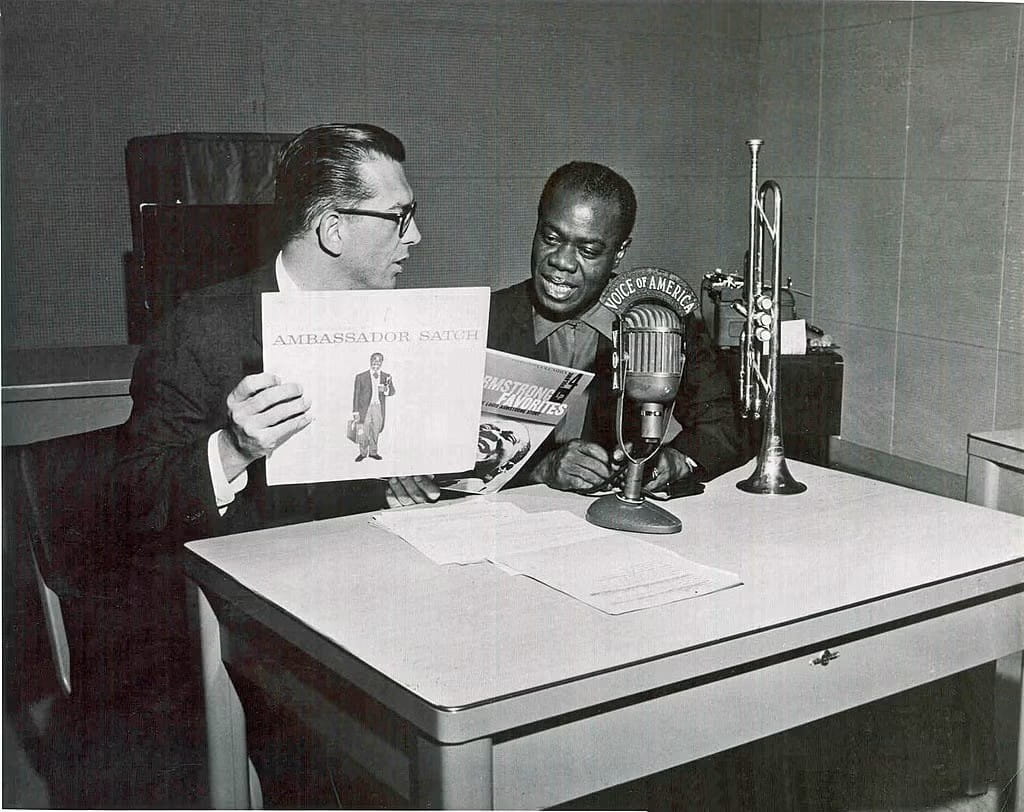
Conover interviewed central figures of American jazz, such as Louis Armstrong. Photo: VOA Archive.
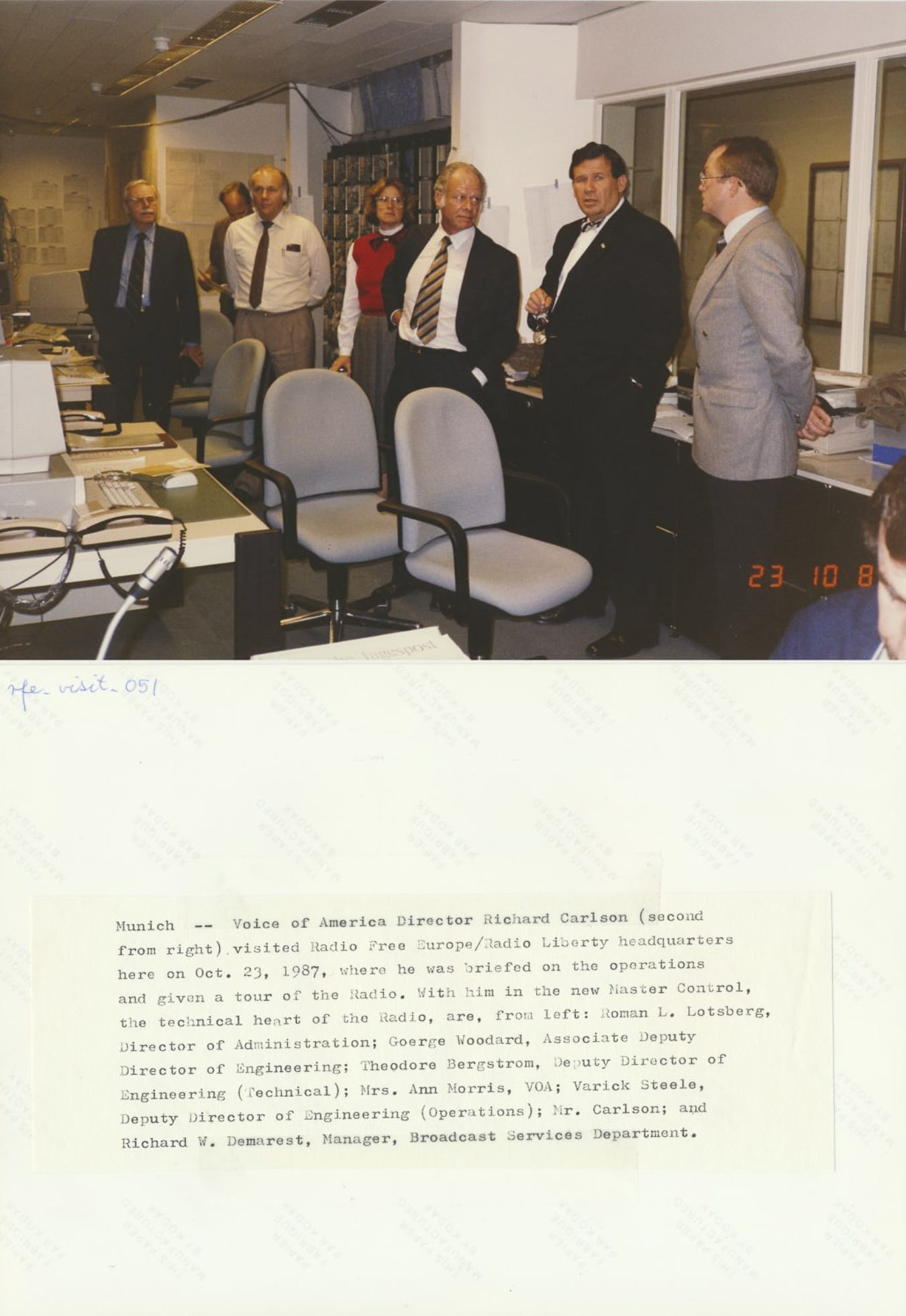
The US expanded its media influence with the creation of Radio Europe (RE) and Radio Liberty (RL). Photo: Blinken OSA Archivum.
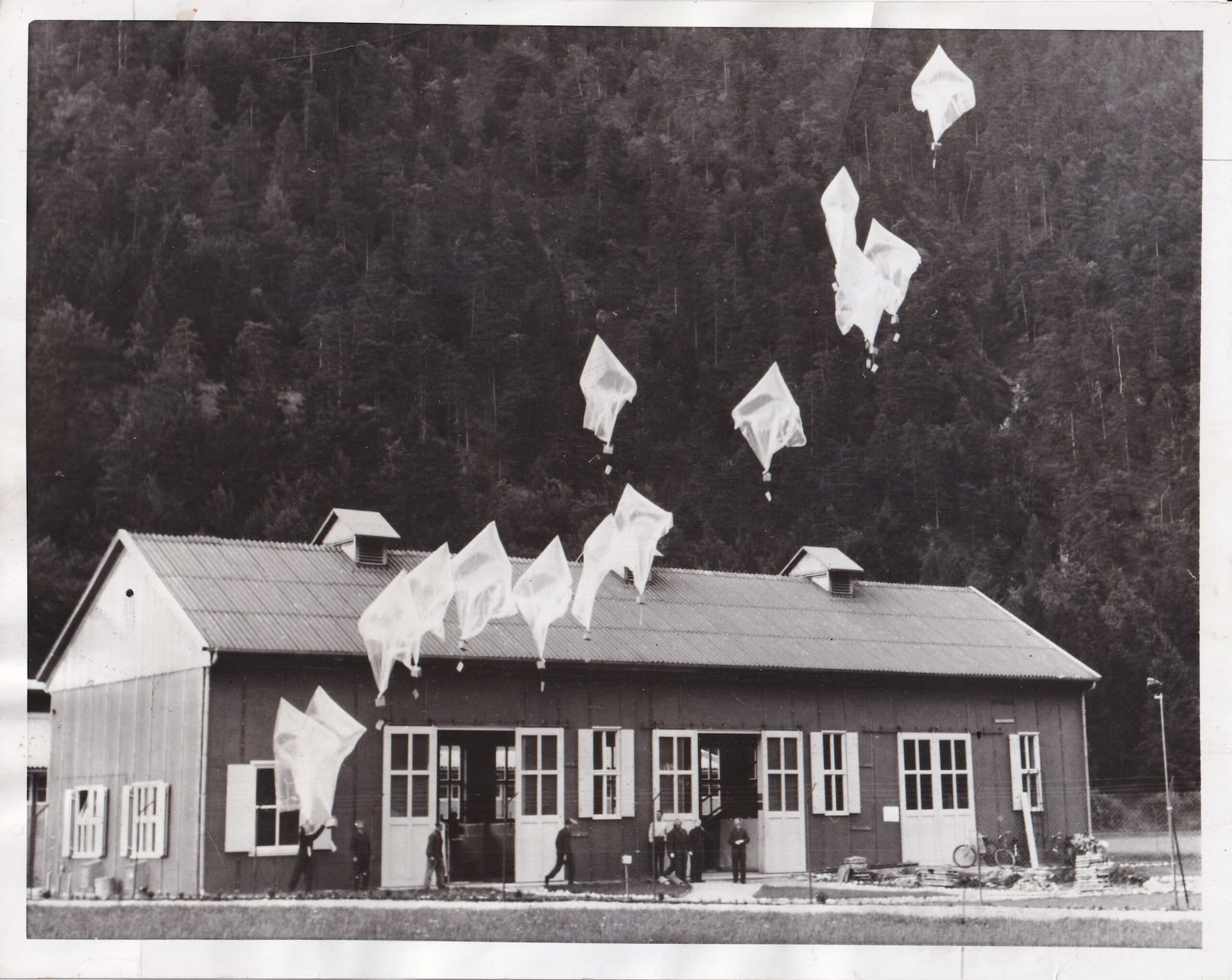
The balloon campaign began in Czechoslovakia. Photo: Hoover Institute Archives.

From their offices in Munich, RE and RL reported on countries behind the Iron Curtain. Photo: Blinken OSA Archivum.
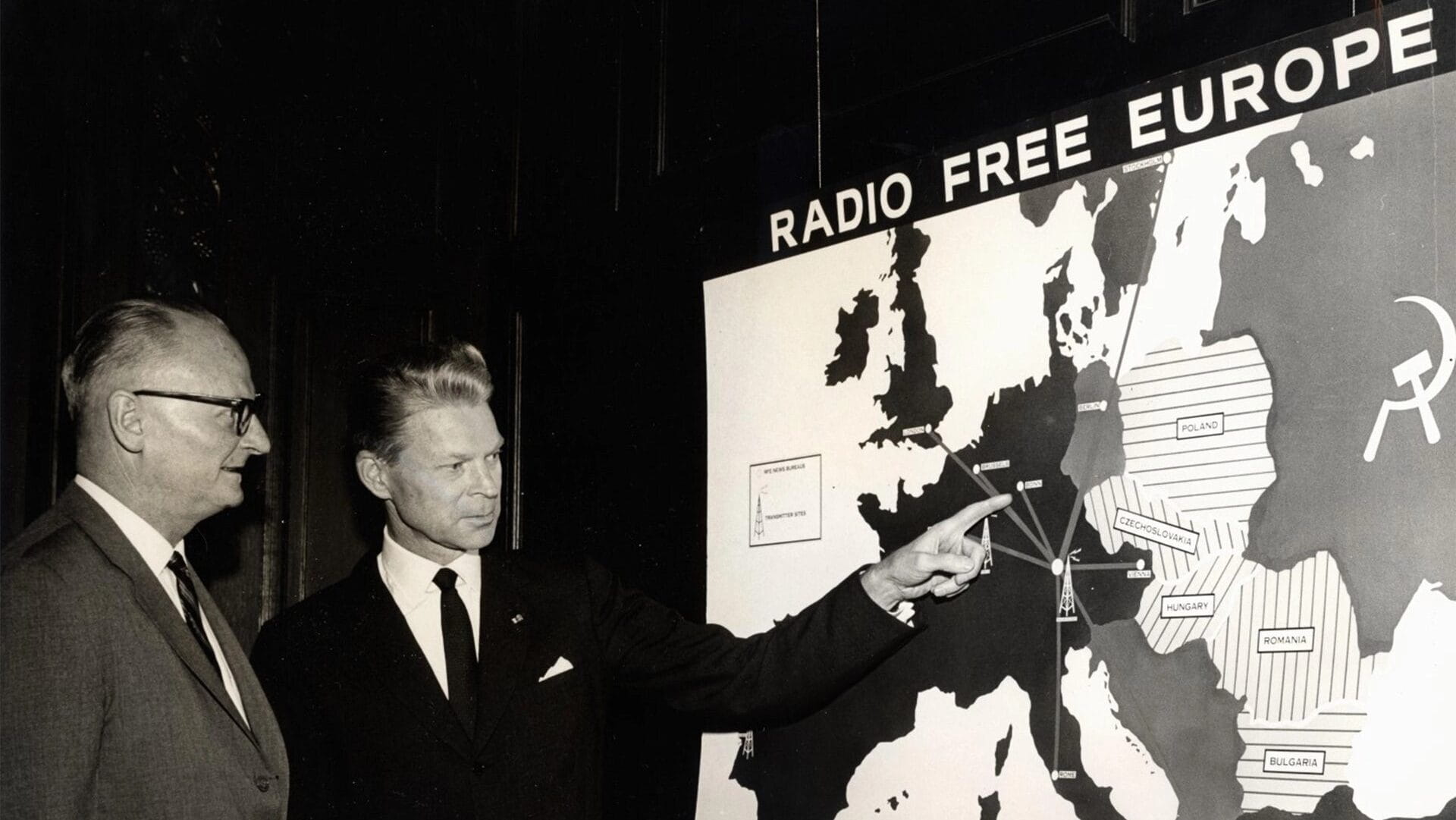
From Munich, Radio Europe began broadcasting in Poland, Czechoslovakia, Hungary, Romania and Bulgaria, while Radio Liberty focused on the USSR, both serving as surrogate media for the societies in these countries. Photo: Blinken OSA Archivum.
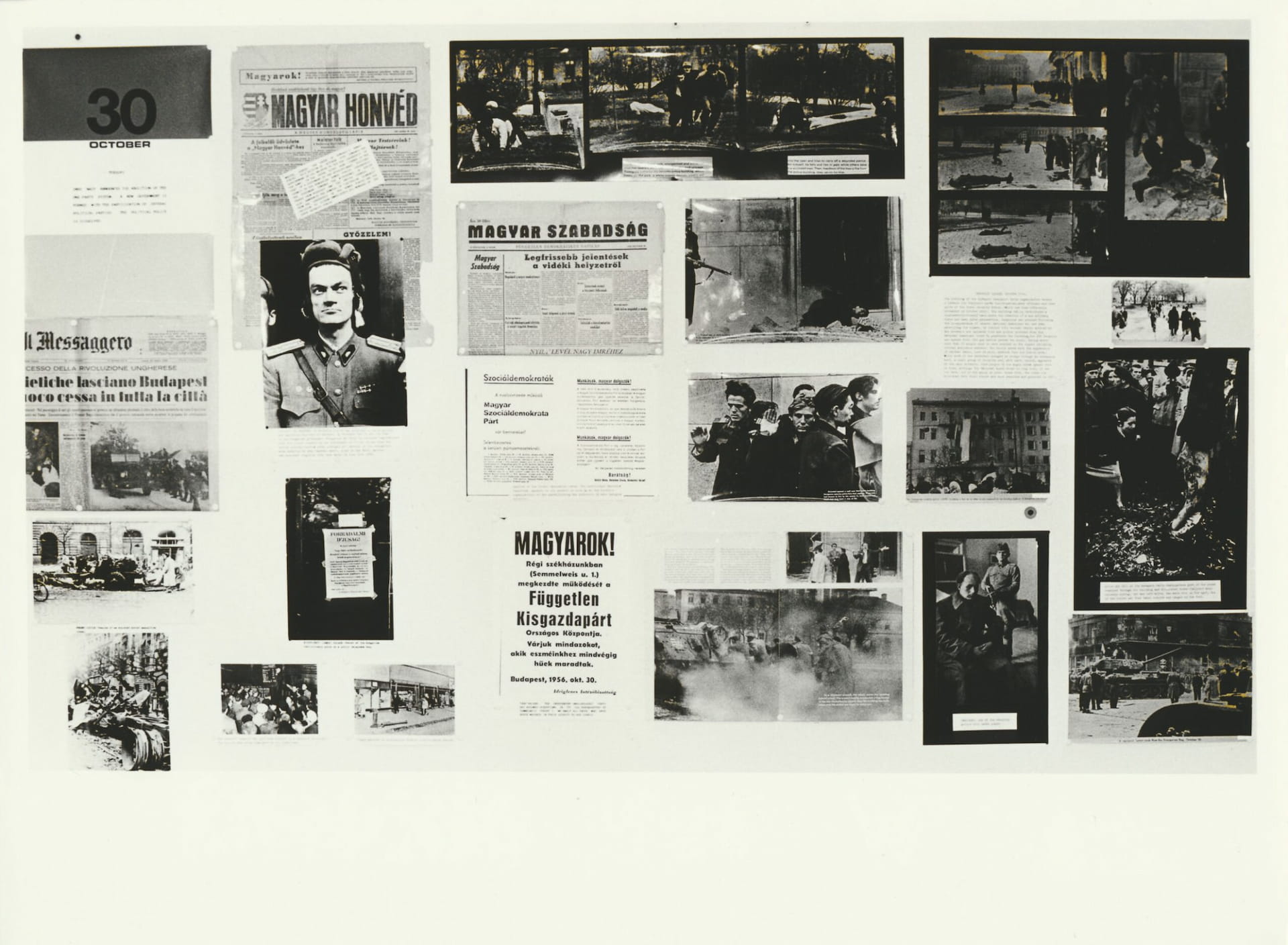
In 1986, RFE/RL organized an exhibition to commemorate the 30th anniversary of the Hungarian Revolution. Photo: Blinken OSA Archivum.
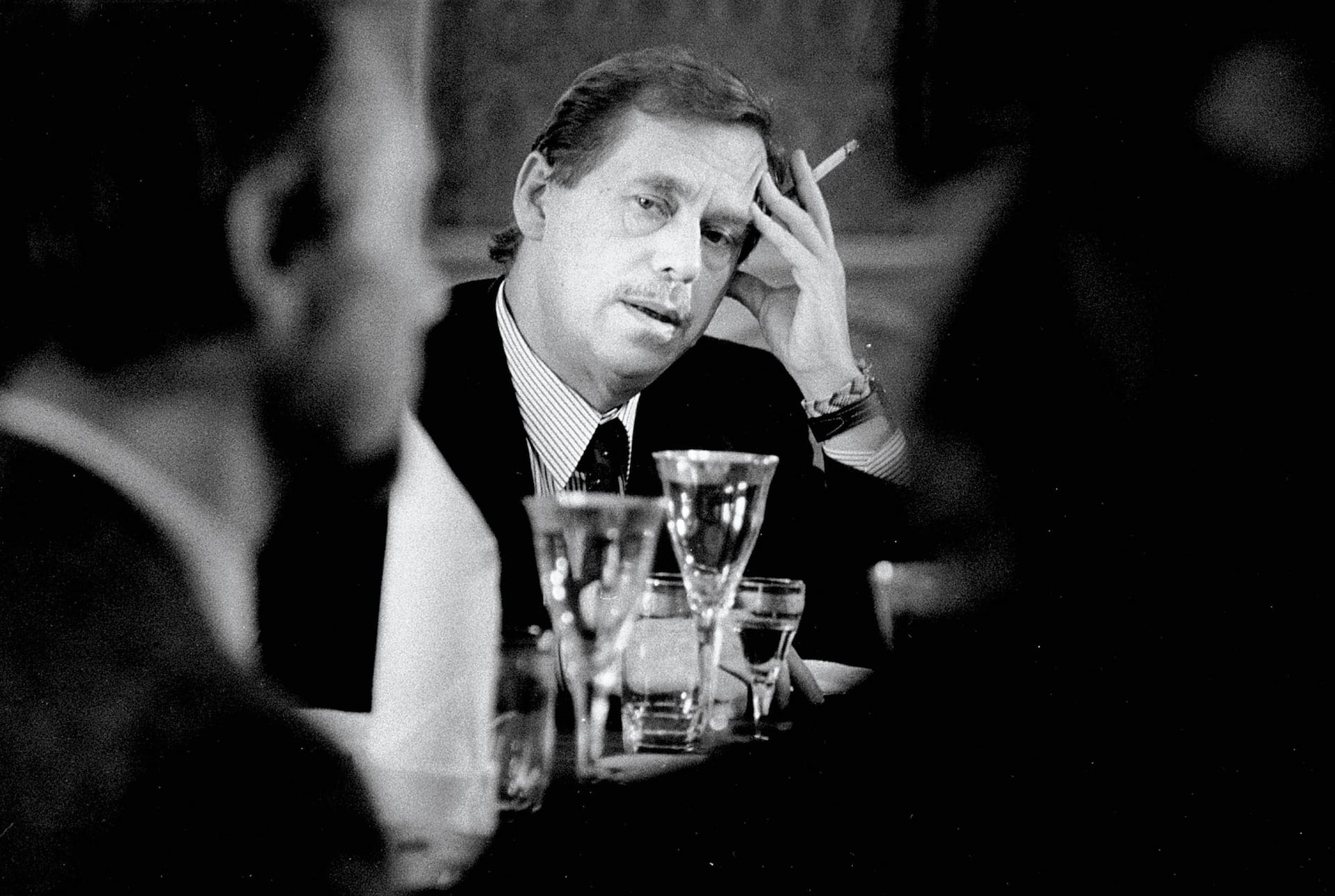
RFE/RL’s headquarters moved from Munich to Prague in 1995 at the invitation of Václav Havel. Photo: Open source.
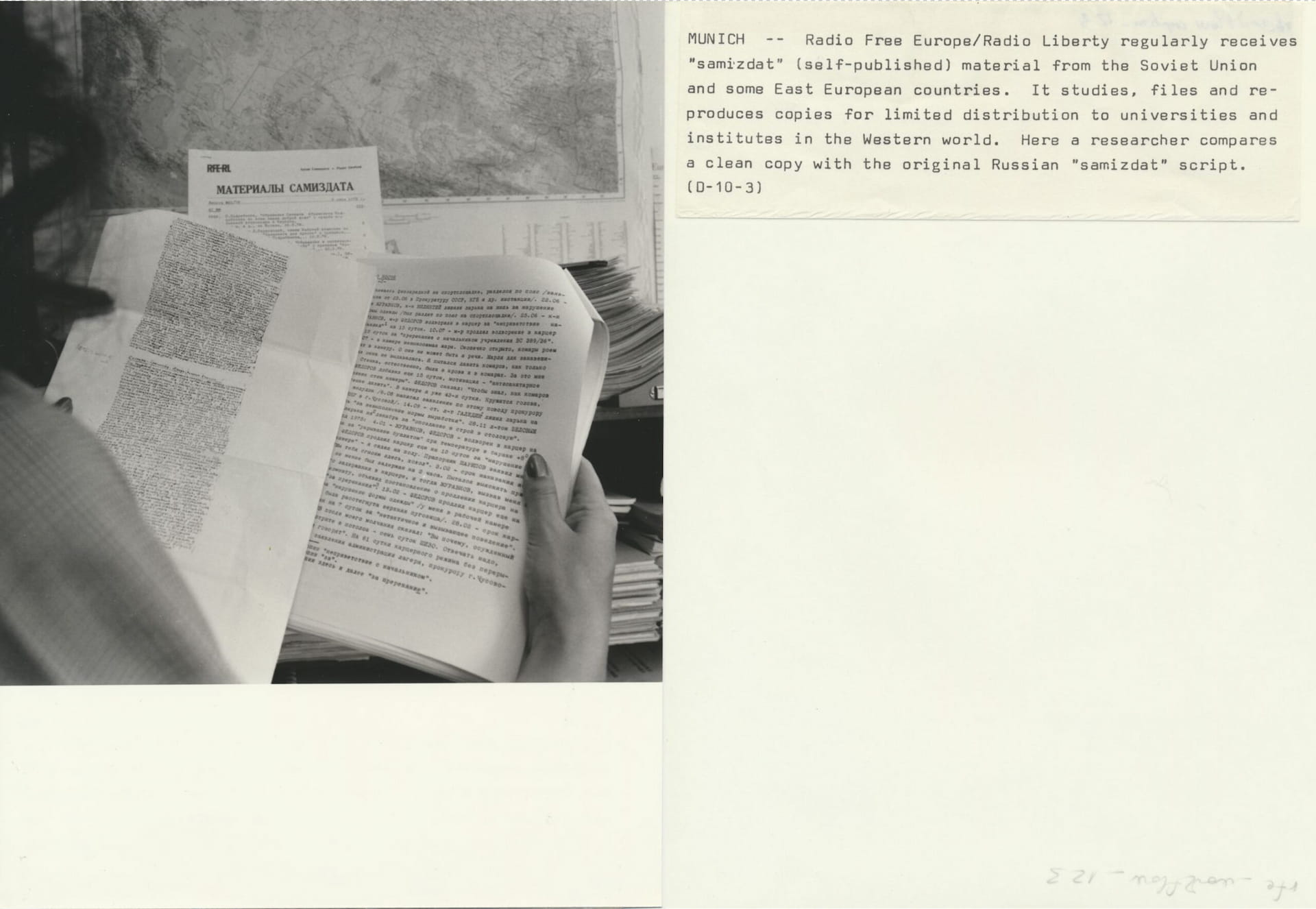
Dissident writings that had been circulating in limited form through samizdat were broadcast by RFE/RL and reached wider audiences. Photo: Blinken OSA Archivum.
“RFE/RL stands out as an American-European medium, financed by the United States, yet more domestic than VoA and more international than local media,” Paçarizi said.

For the first time since 1942, VoA ceased broadcasting in March 2025. Photo: Rhododendrites / CC
The uncertain future of these two broadcasters calls into question the very model on which they were built.

Gentiana Paçarizi
Gentiana Paçarizi is a journalist and holds a master’s degree in Journalism and Public Relations from the University of Prishtina “Hasan Prishtina.” She served as Managing Editor at K2.0 from 2022 to 2026.