Refik Sylejmani knows exactly how many stairs lead up to the Main Family Medicine Center (MFMC) in Prishtina and how many steps he must take from the entrance to the counter where insulin is prescribed. With a hat on his head and glasses now necessary due to his worsening eyesight caused by diabetes, Refik goes to the MFMC every month. There he waits to receive the doctor’s certificate confirming that he suffers from diabetes, so that he can collect his monthly dose of insulin. The booklet he carries in his pocket proves that Refik has been diagnosed with diabetes for over 10 years.
“I have a coffee with my friends, which I meet here in the center everyday, and then I go to the MFMC,” says the 67-year-old, as he talks about the time he spends with other pensioners at the Social Cultural Center for the Elderly in the “Tophane” neighborhood, one of the oldest areas of the capital, where he lives. Before Kosovo’s last war, Refik worked as a salesman at the Palace of Youth and Sports. After the year 2000, he worked as a security guard at the Gërmia Swimming Pool. More than 10 years ago, his health began to deteriorate due to diabetes.
Diabetes is a chronic and incurable disease that occurs when the pancreas does not produce enough insulin or when the body does not properly use the insulin it produces. As a result, patients with diabetes require ongoing care and lifelong treatment. Despite his decade-long diagnosis, however, Refik’s medical records are not considered sufficient evidence for him to receive insulin without going through the same procedure every month.
Rina Tafarshiku, an endocrinologist at the University Clinical Center of Kosovo (UCCK) and an assistant at the Faculty of Medicine at the University of Prishtina (UP), states that diabetes is not curable, but can be managed through ongoing treatment. She explains that regular check-ups with an endocrinologist are essential, as managing the disease is complex and involves not only prescribing the appropriate therapy, but also counseling on nutrition and the importance of physical activity. According to her, even when the disease is under control, patients with diabetes should be checked every 3–6 months, and sometimes once a year.
According to Tafarshiku, the bureaucratic monthly check-ups required for the supply of insulin become a major challenge for most patients.
“Advanced age and poor health make it impossible for many patients to go without the help of their families. In these cases, doctors must calculate and provide the amount of insulin that would be enough for several months,” she said.
Refik feels the same.
“Instead of care, we are faced with a system that seems to have forgotten that time for us is medicine,” he said.
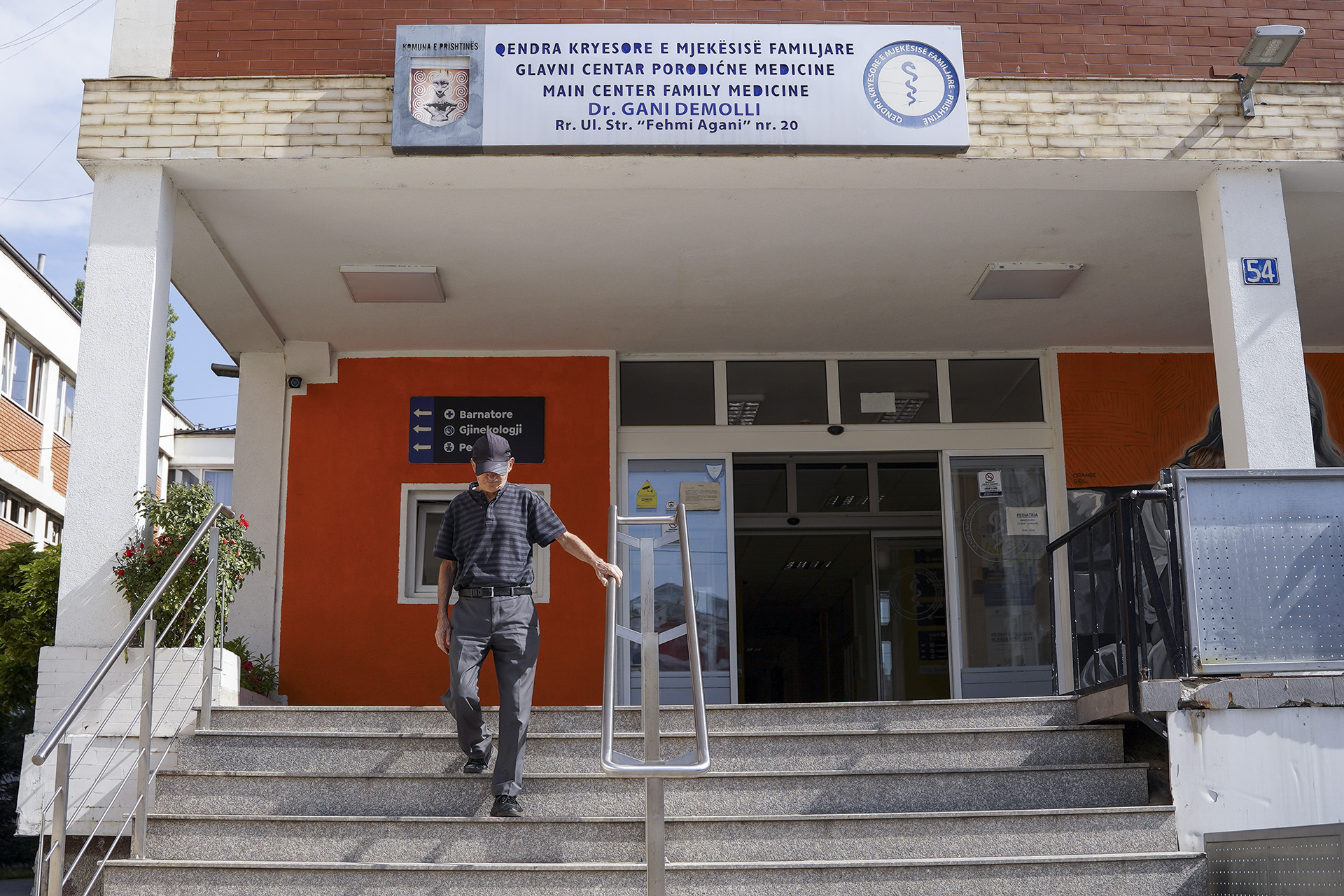
Refiku goes to the MFMC every month and waits to receive a doctor’s certificate confirming that he suffers from diabetes, so that he can receive his monthly dose of insulin. Photo: Amir Vitija / K2.0
In the narrow, white corridor of the MFMC facility, he almost always meets the same people — often exhausted by their illness, but even more so by waiting in the same lines every month. There are no words exchanged in the line, only sleepy faces sharing the same experience: life with a disease that demands iron discipline in a system burdened by papers and signatures.
To get the essential list of medicines, Refik, like thousands of other patients with chronic diseases, first presents himself at the counter, where he is registered and noted. From there, his data is entered into the digital system, which, according to doctors, very often does not function properly, and the patient is then sent to the doctor. After completing his visit, he must return to the counter again. If the printer is working, the printed visit report will be waiting for him there. With this paper in hand, he returns to the doctor. However, the doctor is rarely available — usually at this point, another patient is visiting. To get the doctor’s stamp or signature, Refik is forced to enter, interrupt the visit, and, unwillingly, violate someone else’s privacy. Only after the report has been signed or stamped can he proceed to the pharmacy, located a few meters from the entrance to the MFMC courtyard.
This pharmacy is the only one in the city where citizens can obtain essential medicines, as these medicines are not sold in private pharmacies due to the absence of a unified national pharmacy database, which the Ministry of Health (MoH) could supervise.
Here too, Refik waits in line. In the narrow space of only 70 square meters, two pharmacists serve the many patients who wait. Refik stops in front of a machine in the narrow hallway, near the pharmacy door. He touches the screen, where he must select the medicines he needs. The machine provides a small piece of paper — a number showing his place in line. Then, with the number in hand, he waits. There is nowhere to sit because there is only one seat for two people. The others like him, stand or sit on the stairs, waiting for their number to be called. The faces he sees there are almost always the same ones: elderly people holding bags of prescriptions as they come to pick up their medication, and young people who are often waiting for their parents or sometimes for themselves.
Even this documentation is insufficient as a record of Refik’s illness.
Around 2,800 patients face this bureaucracy every month, a system that hinders easy access to healthcare, which is accompanied by papers, prescriptions, protocols, stamps, long waits and the absurd need to constantly prove your illness.
However, even this documentation is insufficient as a record of Refik’s illness.
If Refik wanted to report all his check-ups from the past ten years, the health staff would have to go down to the basements where the physical files are stored to look for copies of the reports, since digitalization is lagging. Most of the time, it is the patients themselves who keep their medical reports and are forced to attend visits with a mountain of documents in hand. If Refik wanted to be examined by another specialist for a different health problem — whether in the public or private sector — the doctor would have no way of knowing he has diabetes unless Refik tells them himself.
Meanwhile, in most health systems in the region and across Europe, a single click is enough to view a patient’s entire history, because the basic principle of “one patient, one card” is applied. In Kosovo, however, such a digital and centralized system — one that would be accessible across all levels of healthcare — is missing. As a result, every time a patient is examined by a new doctor, the process begins anew: the collection of medical and family history is repeated at every visit, for every patient.

The booklet he carries in his pocket proves that Refik has been diagnosed with diabetes for over 10 years. Photo: Amir Vitija / K2.0
One patient, one medical ID
As the healthcare system continues to struggle with papers and protocols, Kosovo has spent more than a decade trying to operationalize a health information system, known as HIS — a reform that could have solved these problems long ago. If the HIS were functional, patients with diabetes or other chronic diseases would have a unified medical file, commonly known as a digital medical card, summarizing their entire health history: blood type, diagnoses, therapies, interventions and family history.
At every level of the healthcare system, each healthcare professional — whether in the public or private sector — would have access to the same patient file, stored in a centralized electronic health registry at the national level and networked across public and private healthcare institutions. This registry would serve as a national database in which all citizens’ medical information is securely stored in digital form, enabling a doctor in Prishtina to immediately access test results for a patient from Prizren, without the need for any physical documents.
This system would include not only medical centers, but also laboratories, pharmacies and diagnostic clinics, enabling every examination, analysis or therapy to be automatically recorded in the patient’s unique file. Such a registry would also enable patient information to move easily from the basic level of healthcare, such as the MFMC in each city, to regional secondary-level centers, and then to the UCCK, which represents tertiary-level care.
To a large extent, this would eliminate the medical report files that currently burden patients and would significantly increase transparency, as it would be clear who treated the patient and what interventions were performed by each health professional.
To make the HIS functional, the electronic prescription system (in English: “e-prescription”) would first need to be operational. With it, Refik’s monthly wait to receive insulin would become a thing of the past. The electronic prescription is designed as a digital system through which doctors issue prescriptions directly on the national health platform, rather than using a physical sheet that must be signed and stamped. In this way, pharmacies — whether public or private — would have immediate access to the patient’s data and would be able to dispense the therapy without delay or bureaucracy.
Without a functional HIS, the system operates as a fragmented and uncoordinated network, where each part functions independently of the others.
To enable e-prescriptions, the next step would be to create a digital database that includes all pharmacies nationwide. Such a database, linking public and private pharmacies with the electronic prescription system, would allow patients like Refik to avoid relying solely on a public pharmacy to obtain free insulin. Essential medicines funded by the state would also be available in private pharmacies, thereby reducing waiting times and significantly improving access for patients with chronic conditions.
But reaching this level is still far off for Kosovo’s health system. Without a functional HIS, the system operates as a fragmented and uncoordinated network, where each part functions independently of the others. The public and private sectors operate separately, without a shared database for exchanging medical information.
Even within the public sector itself, data does not circulate horizontally — between departments of the same institution — nor vertically, between different levels of healthcare (primary, secondary and tertiary). As a result, a doctor at the MFMC cannot see the laboratory tests or examinations a patient has undergone at the regional hospital, while the hospital has no access to the treatment history from primary care centers.
In this reality, patients are the sole carriers of their medical documentation, storing and transferring reports, prescriptions and test results from one institution to another.
The same structural division applies to pharmacies, laboratories and diagnostic clinics, which operate separately from each other and from the public health system.
In this reality, patients are the sole carriers of their medical documentation, storing and transferring reports, prescriptions and test results from one institution to another. This disorganized situation makes the health system slow, bureaucratic and incapable of ensuring continuity of care, avoiding the repetition of tests or building a national health profile.
The health system continues to function in a fragmented and uncoordinated manner even after a decade of efforts to put the HIS into operation.
In 2011, the MoH began implementing the expansion of the HIS in three phases. The first two phases were planned to include piloting and implementing the system in 30% of the country’s territory, with evaluation of the pilot at the end of 2014. The third phase involved implementing the system nationwide — an objective intended to be achieved by 2020.
More than a decade later, the HIS is only partially integrated into the primary healthcare system. Currently, only the Basic Health Information System (BHIS) operates in some MFMCs, functioning as the simplest and most limited form of the HIS. As a result, most of the health system — especially the secondary and tertiary levels — continues to operate manually, without any integrated digital connection between them.
What is BHIS?
The Basic Health Information System (BHIS) is a web-based digital platform that collects and centralizes key patient data — such as registrations, visits and basic health information — which are entered directly by medical staff in health centers.
BHIS is currently implemented in 29 Main Family Medicine Centers (MFMCs), 40 Family Medicine Centers (FMCs) and 2 Family Medicine Ambulances (FMAs), as well as partially in some specialist outpatient clinics of the general hospital in Gjilan and in seven specialist outpatient clinics of UCCK.
However, in addition to the fact that BHIS is only partially implemented, the system is often out of order, forcing doctors to return to old methods such as handwritten forms.
Rashit Ismajli, a Family Medicine Specialist at the MFMC in Prishtina, has been working at this center for more than seven years. Ismajli says that he and his colleagues welcomed the integration of the HIS after the coronavirus pandemic in 2020. However, instead of making their work easier as expected, the system often makes it more difficult for them to examine patients.
“The malfunctioning of the HIS significantly complicates the daily work of doctors at the MFMC. When this system does not work, we are forced to work manually, which takes a lot of time and increases the risk of errors or the repetition of unnecessary examinations,” said Ismajli. According to him, this leads to a loss of continuity of care, while the administrative burden on staff increases significantly.
“When the system is not functional, for each patient we have to take the anamnesis and medical history from scratch, often relying only on the patient’s memory or on paper documents they bring. This is tiring for the doctor and stressful for the patient, because it delays the consultation process and can affect the accuracy of the clinical assessment,” Ismajli said.
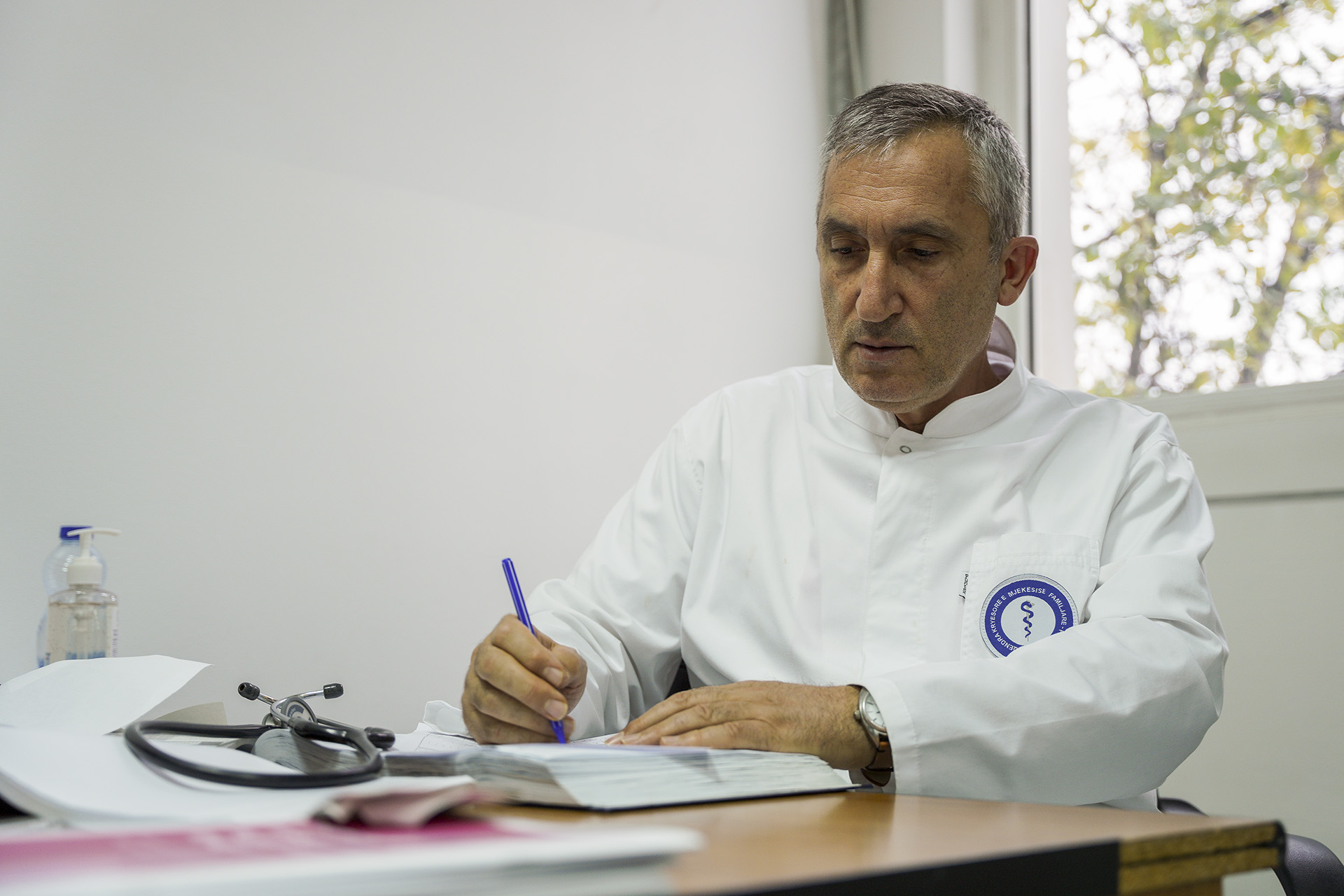
Family Medicine Specialist at the MFMC in Prishtina, Rashit Ismajli, says that when the digital system does not work, doctors are forced to work manually, which takes a lot of time and increases the risk of errors and the unnecessary repetition of examinations. Photo: Amir Vitija / K2.0
According to Ismajli, in chronic cases such as hypertension, diabetes or hypothyroidism, the lack of a historical overview of the results makes it much more difficult to monitor the patient’s progress and adjust therapy accordingly.
Saranda Ramaj, a journalist who has covered the health sector for the newspaper Koha Ditore for years, mentions cases of diabetics who have to submit new medical reports every month to receive insulin.
“It is absurd that a person with diabetes has to ‘prove’ every month that they still have diabetes, just because the system does not keep an electronic clinical record,” she said, noting that a similar situation also occurs with cardiovascular patients or those with cancer.
Besim Kodra, leader of the Association for Patients’ Rights in Kosovo (APRK), says that the lack of a functional HIS creates a bureaucratic chain in which the patient often has to visit several offices and submit the same documents repeatedly.
“The most affected are chronic patients such as diabetics, those with cardiovascular diseases, asthma, oncological diseases, or those who need continuous therapy,” said Kodra, adding that patients with disabilities and those living in rural areas, where access to services is more difficult, also suffer the consequences of the lack of digitalization of health services.
A similar situation once existed in Albania; however, the country managed to address this problem by modernizing its medical prescription system. After more than a decade of using electronic prescriptions, on 1 August, 2025, Albania unified the model across both the public and private sectors. The new unified prescription standardizes the prescribing and dispensing of medications, facilitating the work of pharmacists and increasing patient safety, as it includes the diagnosis, the generic name of the drug and therapy details.
With the new model, doctors can issue prescriptions valid for up to six months for patients on stable therapy, such as those receiving insulin. This saves patients from monthly doctor visits and enables them to obtain their medications at any licensed pharmacy, public or private.
Why did the HIS stall?
Numerous analyses and reports over the years, including feasibility studies, show that the HIS has failed to be implemented as planned due to a chain of factors related to inadequate infrastructure, improper handling of human resources, uncertainties regarding health data, insufficient funding and weak leadership. Every attempt at implementation has stalled in limited pilot phases, without ever succeeding in expanding to the national level.
According to the National Auditor’s Report and the feasibility study for the HIS, conducted for the World Bank (WB) in 2023, infrastructure problems have been one of the biggest obstacles to its implementation. Many health centers in the country lack the necessary computers and technological equipment to support such a system. Even where efforts have been made to install them, the internet network is often weak, unstable and unsuitable for operating a comprehensive digital system.
Furthermore, in places where the HIS has been partially installed, the lack of trained staff has meant that the system does not function in practice. Training provided in the past was largely superficial, lasting only a few days, and failed to equip health workers with the skills needed to use the system. As a result, staff — despite having attended training — often lacked the basic knowledge to utilize the program’s main functions.
In practice, many institutions have maintained a dual system, storing data in both physical and digital form.
Another major problem has been the lack of a clear framework for protecting health data. The National Auditor’s report revealed that the system, during its pilot phases, lacked stable security mechanisms and allowed unauthorized access to patient data. This created uncertainty in both legal and ethical aspects, directly affecting the trust of citizens and healthcare professionals.
In practice, many institutions have maintained a dual system, storing data in both physical and digital form. However, these two forms often did not correspond to one another, creating confusion and uncertainty in the management of health information.
In addition to infrastructural obstacles and the lack of human resources, the WB feasibility study highlights that the implementation of the HIS has been hindered primarily by the lack of clear institutional governance and a proper legal framework for the digitalization of healthcare. The report notes that Kosovo still does not have a centralized authority for “e-Health” that would guide, monitor and standardize the implementation of health information systems. As a result, projects have been developed in a fragmented manner by different agencies, often without coordination between the MoH, the Information Society Agency (ISA) and health institutions. This has created an institutional vacuum in which no single body bears full responsibility for implementing and maintaining the system.
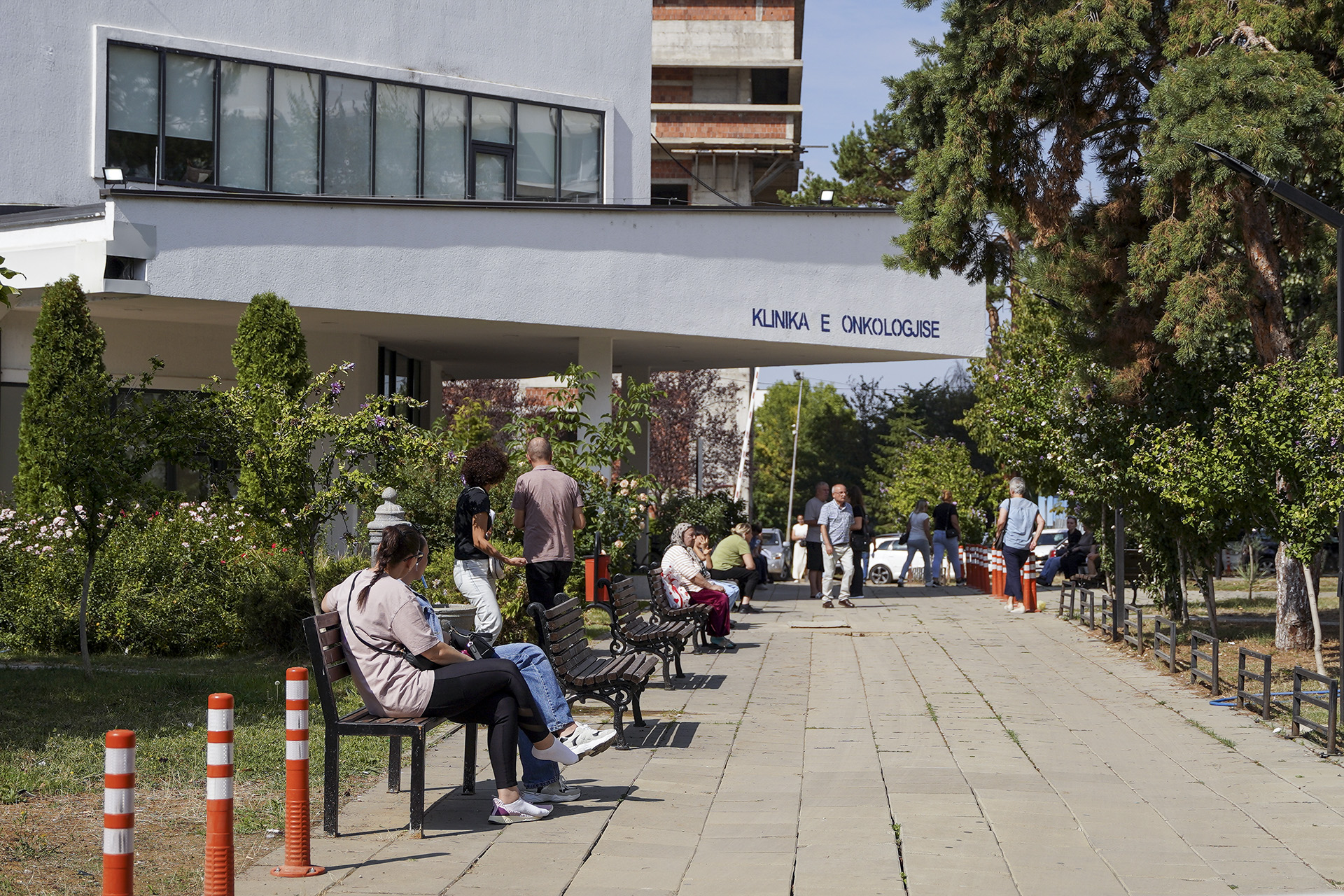
The lack of HIS mostly affects chronic patients such as diabetics, those with cardiovascular diseases, asthma, oncological diseases or those who need continuous therapy. Photo: Amir Vitija / K2.0
Meanwhile, a report by the Konrad Adenauer Stiftung (KAS) on the HIS also highlights limited and unstable funding as another key reason why the system has not been implemented. Kosovo’s health system, which operates with a much lower budget than countries in the region and the European Union (EU), has been unable to make significant investments in digital technology and infrastructure. As a result, projects for the digitalization of healthcare have often depended on international donors or loans.
Based on the feasibility study, the MoH has developed a strategic plan for the HIS through 2030. Meanwhile, according to the Health Sector Strategy (HSS) 2024–2030, the HIS is considered a key reform that will ensure the modernization of the public health sector. The document forecasts a total cost of 54 million euros, distributed over several years, supported by the state budget and World Bank loans, while 12 million euros have already been secured for the first phase. The government has set a series of objectives and indicators, with the promise that by 2030, the system will be integrated and functional at all levels of healthcare.
While documents speak of full digitalization by 2030, the fact that today only 20% of basic systems have been developed shows that the HIS is still very far from becoming a reality — turning its absence into a burden for patients, who carry their files from door to door.
However, the current reality is far from these goals. The strategy itself acknowledges that the development level of basic medical systems is only 20%. This means the system is still in its initial phase, despite having been a strategic objective for more than a decade. The strategy aims for this level to reach 60% by 2027 and 95% by 2030. Meanwhile, for the digital structure in healthcare — which the strategy states is currently 60% functional — full integration is targeted by 2030. Here too, the lack of a stable financial and technical base, as well as insufficient managerial capacity, make the path toward this goal extremely uncertain.
A similar situation applies to support systems, which have been developed at only 20%. The strategy envisions reaching 70% by 2027 and 100% by 2030.
In essence, the strategy presents an ambitious plan, but one that clashes with a grim reality: lack of infrastructure, insufficient staff training, serious shortcomings in security and data management, and a repeated history of failures to implement previous strategies. While official documents speak of full digitalization by 2030, the fact that today only 20% of the basic systems have been developed shows that the HIS is still very far from becoming a reality — turning its absence into a burden for patients, who must carry their files from door to door.
Lack of a health profile at the national level
The absence of a functional HIS not only worsens the situation for patients but also significantly complicates the work of doctors and makes evidence-based strategic planning at the national level almost impossible.
This situation not only slows down the process of medical care, but also prevents the creation of a complete picture of the population’s health status, leaving the health system without accurate data on diseases, therapeutic needs and human resources.
According to Bujar Vitija, a health sector journalist and founder of the “Shneta” portal, without a functional HIS, there can be no accurate data on diseases, which hinders all efforts to improve health treatments, plan services and protect public health.
“We do not have accurate data on how many patients suffer from certain diseases, how many recover and how many die,” he said, adding that the entire health system is affected by the lack of an HIS.
According to a 2022 report by the Ombudsperson Institution (IAP), which examined the collection and reporting of health data in Kosovo, the Kosovo Agency of Statistics (KAS) assessed that data from the health sector is partial, inaccurate or reported late. In addition, the lack of reporting from the private sector deepens statistical gaps, making it impossible for KAS to provide a complete overview of the country’s health indicators. This situation demonstrates that as long as the HIS is not operationalized at all levels of healthcare, Kosovo will continue to rely on fragmented and outdated data, preventing the creation of a real and reliable public health profile.
Data is collected in Excel files or paper documents, then cleaned manually and re-entered into Excel to prepare statistical reports.
The Center for Health Statistics, which operates within the National Institute of Public Health (NIPH), is responsible for collecting data from all levels of healthcare — primary, secondary and tertiary — including the private sector. According to the World Bank feasibility study on the HIS, all statistical processes in the health system are still carried out manually.
The study notes that data is collected in Excel files or paper documents, then cleaned manually and re-entered into Excel to prepare statistical reports. This process is slow, requires significant time and human resources, and the lack of sufficient staff means that reports are not completed in real time. As a result, Kosovo fails to generate up-to-date and accurate health data.
According to this study, the creation of a national health profile will only be possible if all existing health data systems are connected to a single national platform, such as the HIS.
The study also highlights the lack of common standards and interoperability between systems as key structural obstacles that have hindered the development of a unified system. For this reason, health data cannot be automatically exchanged between hospitals, laboratories, family medicine centers and public pharmacies. The study recommends creating a national data exchange mechanism (in English: Health Information Exchange – HIE) and adopting a legal framework for the protection, standardization and secure use of health data as prerequisites for the sustainable implementation of the HIS.
Modules that need to be integrated to create a national data exchange mechanism
-
(Basic Health Information System) – used in primary care for recording patients and visits;
-
(Hospital Management Information System) – collects clinical, administrative and financial data in hospitals;
-
(Laboratory Information System) – tracks laboratory tests and their results;
-
(Radiology Information System) – stores and distributes medical imaging such as scans, X-rays or magnetic resonance images.
When these systems are interconnected through a national data exchange mechanism, patient data will flow seamlessly between health institutions, enabling the creation of a complete picture of the population’s health in Kosovo.
Through this system, the MoH would have access to standardized and up-to-date data from all public and private institutions, enabling the creation of a national health profile. This profile would reflect the real-time spread of diseases, vaccination rates, drug use, mortality, and other health indicators that are essential for designing evidence-based policies.
The HIS would thus transform data collection from a fragmented and manual process into an advanced, analytical and comprehensive system.
However, according to this study, currently only the BHIS is functional in Kosovo, while the other main systems — HMIS, LIS and RIS/PACS — are missing or still in the planning phase
Although the Health Sector Strategy itself presents data on demographic indicators, the health status of the population and the functioning of the health system, it does not provide a complete or accurate picture of Kosovo’s health profile, precisely because the HIS is not functional. The report states that limitations in data collection and accuracy, along with fragmented reporting by public institutions and the lack of reporting by some private institutions, make it impossible to present a reliable overview. It also notes that the data presented “should be treated with caution,” as they do not reflect the full reality.
This shows that without the HIS, even the most important strategic document in the health sector fails to fulfill one of its fundamental functions: describing and analyzing the real health status of the population. In other words, the strategy aims to guide the development of the health sector, but at the same time admits that it lacks the main tool needed to assess the reality on which this planning is based.
Supervising editor: Gentiana Paçarizi
Feature image: Amir Vitija / K2.0

This article was published with the financial support of the European Union as part of the project “Diversifying voices in journalism.” Its contents are the sole responsibility of Kosovo 2.0 and do not necessarily reflect the views of the European Union.