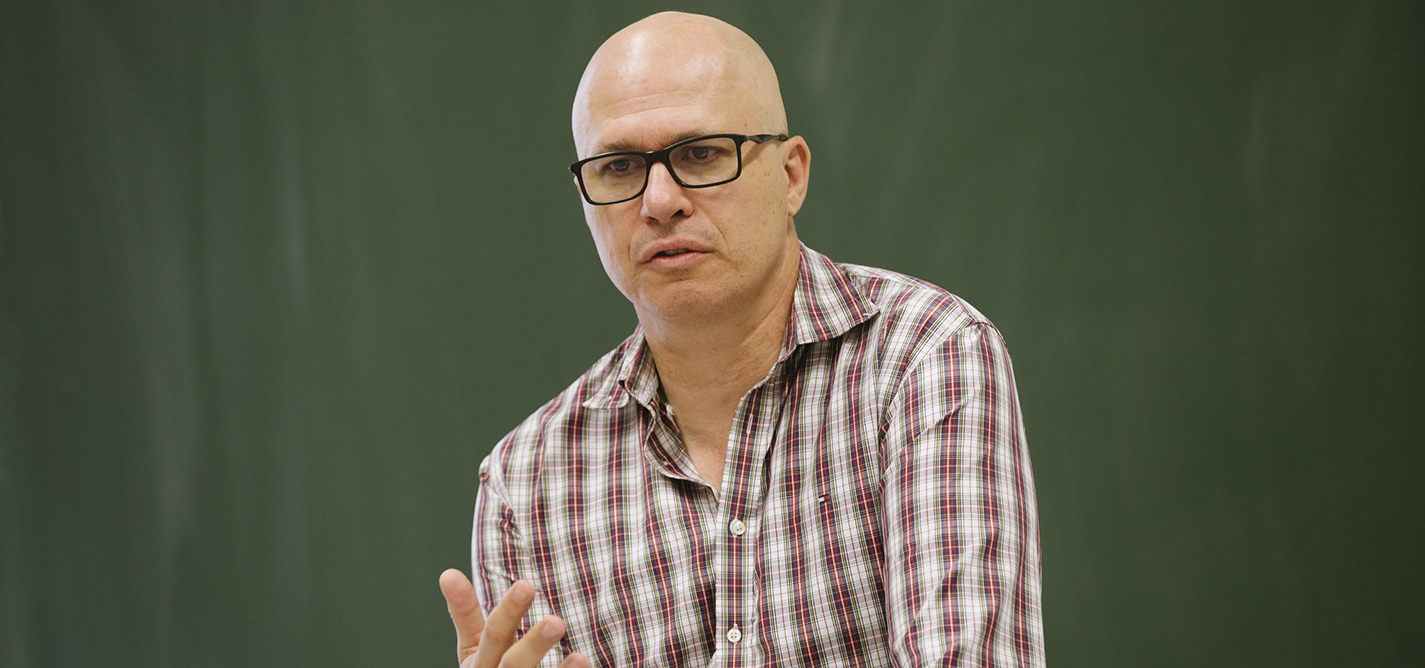
Aleksandar Hemon: The Balkans is just close enough to being Europe to perpetually fail at being Europe
One of the most acclaimed writers and thinkers of our times speaks on genocide denial, Western societal arrogance and a lifetime of displacement.
The implication is that for as long as there are Muslims around there will be a possibility of genocide.
Of course, those Balkan people may have overdone it, what with genocide and all, but they were dealing with the same difficult issues as proper Europeans.
There is a kind of societal arrogance in America that is indistinguishable from delusional belief in the transcendent, eternal American essence.
Migration generates narratives, because movement through human space means that experience and knowledge not only travel but are generated on the way.

Hemon’s latest book explores issues of identity, a common theme in much of his other work. Photo courtesy of Farrar Strauss Giroux.
Moreover, displacement is not a moment — it keeps unfolding, and not in predictable, progressive ways. I feel far more displaced today, in Trumpist America, then 10, 15 years ago, even though I was nowhere near being placed back then.Some 15 years ago, one of my closest friends from Sarajevo was getting married in London, UK, so I went to the wedding. Other than some locals, most of the other attendees were from Sarajevo as well, about 50 or so, but now they lived in Montreal, Geneva, Toronto, Zagreb, Belgrade, etc.A few were close friends, some were good friends, some merely acquaintances, some I never even really liked. Yet, I had this epiphany: If all these people lived in the same place — Sarajevo, London, Chicago, Auckland, Addis Ababa, anywhere — I would move there tomorrow. But there was no such place, and there never will be.
A society is an abstraction, it only exists and is actualized in contact with other people, and most of human contact takes place in your immediate surrounding. So that if some are displaced, all are displaced.
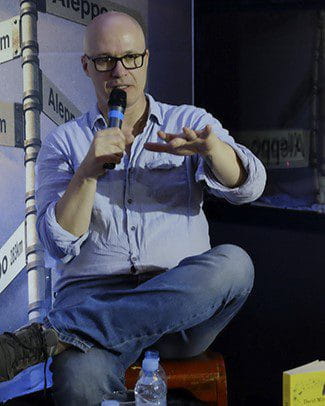
Photo courtesy of Bookstan Sarajevo.
I’m still not a science fiction author. The joy of working in cinema in general, and with Lana Wachowski and David Mitchell in particular, is that it is collaborative, that the whole endeavor of authorship operates entirely differently. When I write a book, every single word in it is mine and I decided to put it in there and they all came out of my imagination and/or experience.In cinema, including screenwriting, other people are always present — intellectually, imaginatively, emotionally, physically. You make absolutely nothing by yourself. This is both limiting, for obvious reasons, but it is also incredibly liberating — minds are joined and expanded to imagine something that none of them could imagine alone.

Bronwyn Jones
Bronwyn Jones is a former editor at K2.0. She has master’s degrees in Media Studies and International Affairs from New School University in New York.